



Paper documents, emails, photos, PDF files… With data-driven decision-making becoming the new standard, it’s vital to find an efficient way to manage diverse data sources.
You’re probably aware of how time-consuming (and costly!) it would be if you had to check each of the files by hand and then type out all of the data, let alone having to fix data entry errors or deal with the consequences of undetected document fraud.
It’s no wonder that, according to the 2025 SER IDP Survey, 78% of companies are already operational with AI in their IDP projects – a dramatic leap forward from just a year ago. Intelligent Document Processing (IDP) automates document handling, helping you turn your data sources into actionable insights with speed, accuracy, and precision.
Keep reading to learn everything there is to know about Intelligent Document Processing and discover how it can transform your document workflow.
What Is Intelligent Document Processing?
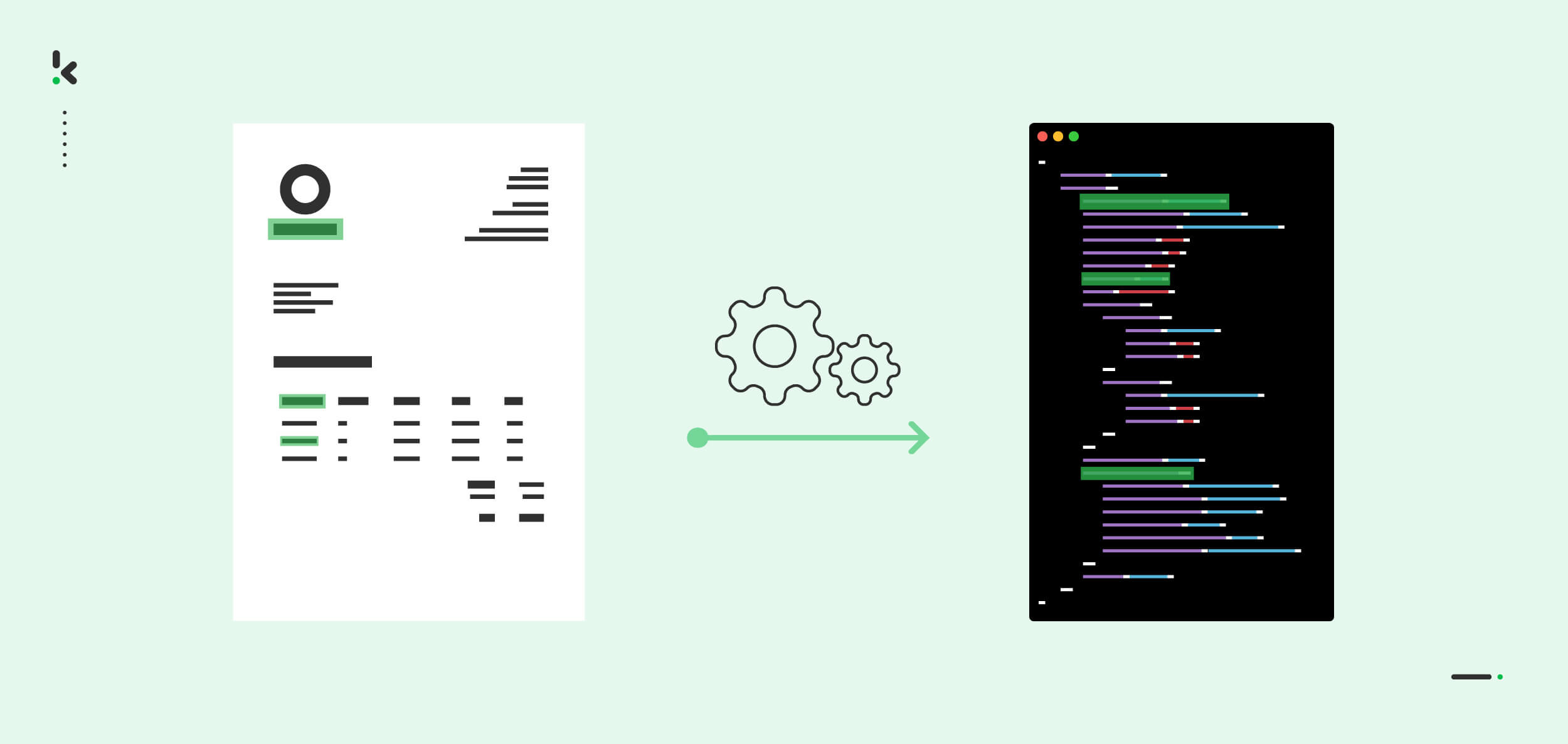
Intelligent Document Processing (IDP) refers to document processing automation focused on extracting and converting data from documents to a machine-readable format, such as CSV, JSON, and XLSM, for easy integration with different business systems.
With IDP, you can extract specific data fields, automate document classification, verify the authenticity of documents, anonymize sensitive data, and even enable fraud detection. When all manipulations are automatically complete and the output is sent to your preferred destination, your only focus is to make informed decisions and propel your business forward.
What Are the Benefits of Intelligent Document Processing?
Intelligent Document Processing solutions provide various advantages for you to look forward to. The following are some of the most significant benefits you simply can’t pass up.
Improved Cost-Efficiency
On average, processing one document manually can cost anywhere from €4-6. With Intelligent Document Processing, this cost goes to less than €0,50. More so, instead of 2-3 minutes per document when processing manually, IDP can take one document through a full processing cycle in up to 10 seconds. Just think how much time & money you can save up!
Unlimited Scalability
IDP is a scalable process. It means that when your company grows and the volume of documents increases, you won’t need to recruit more people or spend more money on another solution. Once implemented, your document workflow will run smoothly in the background.
High Accuracy
Even with careful oversight, manual document processing is unlikely to achieve more than 95% data extraction accuracy. In comparison, IDP can help you attain nearly 100% accuracy. As an added bonus, by automating data entry, you empower your team to focus on more worthwhile activities.
It’s quite clear that by making Intelligent Document Processing a part of your business workflow you can achieve significant improvements. But what makes it possible?
What Technologies Are Used in Intelligent Document Processing?
Simply said, in order to accomplish document processing automation, Intelligent Document Processing uses a number of different technological components. The best intelligent document processing solutions include several cutting-edge technologies, such as:
Optical Character Recognition (OCR)
With its capacity to detect individual characters, Optical Character Recognition (OCR) is able to turn images or scanned documents into text. Integrated into the IDP system, this component empowers the conversion of extracted text into structured, machine-readable formats like JSON.
Artificial Intelligence (AI)
AI extracts meaning from images and documents, detects both patterns and anomalies, and makes predictions based on algorithms. For instance, its capabilities are essential when it comes to fraud detection as AI algorithms can be programmed to flag unusually big sums, detect signs of document tampering, or even spot if amounts on invoices don’t add up.
Computer Vision
Computer Vision allows IDP to view, observe, and perform object detection. For example, it can recognize things such as price tags, license plates, utility meters, and so on.
Natural Language Processing (NLP)
NLP allows IDP to comprehend data more quickly and intelligently. One of the most common NLP techniques is called Named Entity Recognition (NER). It’s frequently used to identify and categorize particular words or phrases in documents. For example, it allows IDP to recognize that “Jane” is a female name and “Amsterdam” is a location.
Another example of NLP would be Fuzzy Matching. It enables Intelligent Document Processing to recognize and extract data that may not be an exact match due to document mistakes or typos, resulting in a more flexible and accurate method of data extraction.
Robotic Process Automation (RPA)
The role of RPA is to make IDP more scalable by automating the processing flow. For example, RPA in finance alone can’t take on the complexities of different financial documents but, as a component of IDP, RPA can automatically complete relevant tasks or communicate with other digital systems making it possible to forward extracted data to any relevant software.
How Does Intelligent Document Processing Work?
We’ve established that, to achieve advanced automation of document workflows, Intelligent Document Processing effectively employs AI, OCR, and other technologies. In this section, let’s see how all of these technologies come together, creating the ultimate intelligent document processing software for your business.
Data Capture
With the help of OCR, IDP captures data from various sources into a computer system for further processing, often with a mobile device. It can be used to scan and capture data from various documents such as receipts, invoices, ID cards, passports, and driving licenses.
Data Extraction
Upon receiving a scanned or captured image of a document, IDP enables unstructured data processing using OCR and AI algorithms. The more advanced the algorithms, the more precise the data extraction.
File Conversion
At the same time, Intelligent Document Processing converts documents, images, or scans into machine-readable formats like JSON, making the data usable to be further integrated into ERP software or company databases.
Classification
Simultaneously, IDP uses AI algorithms combined with NLP to classify documents by identifying document types, countries, languages, and many more. It matches unknown documents to existing categories and then calculates a similarity score. The similarity score is then used to determine the most accurate category. For example, it can recognize whether the document is an invoice or a receipt based on the location of information.
Data Anonymization
Intelligent Document Processing is able to automatically anonymize sensitive information from documents. What it entails is the removal, data masking, or encryption of such data as social security numbers or other personal identifiers for GDPR compliance and other privacy regulations.
Verification
In addition, Intelligent Document Processing can verify the document. It can do it by analyzing data integrity, comparing documents to the earlier processed data using two-way matching, or utilizing fraud detection algorithms.
Delivery & Integration
After the processing is complete, IDP delivers the machine-readable output to the desired destination. This step very much depends on which types of integrations are enabled.
As you can see, with Intelligent Document Processing a vast number of document processes can be seamlessly automated. In the next section, we’re going to dive into how IDP can be applied within different industries.
Applications and Use Cases of Intelligent Document Processing
Intelligent Document Processing can streamline workflows, improve compliance, and unlock hidden value from documents in virtually every industry, from finance to marketing to HR, by automating extraction, verification, anonymization, and fraud detection.
Finance and Banking
Precision is critical in finance because mistakes can lead to loss or compliance fines.
Key IDP use cases include:
- Automated Invoice & Accounts Payable Processing – Swiftly extract, verify, and route invoice data to ERP or accounting systems, reducing errors and manual workload.
- Purchase Order Automation – Capture order numbers, vendor details, and quantities without manual entry, cutting processing time.
- Receipt Processing for Expense Claims – Extract amounts, dates, and merchant names to simplify approvals.
- Fraud Detection – AI algorithms detect anomalies such as fabricated bank statements or invoice manipulation.
- KYC Compliance – Automate checks for Proof of Identity, Address, and Income, meeting AML and CDD regulations.
Pain point solved: Eliminates bottlenecks in payment cycles, minimizes fraud risks, and ensures regulatory compliance without ballooning staffing costs.
Logistics & Supply Chain
Documents drive supply chain accuracy. Use cases:
- Order Management Automation – Extract data from invoices, purchase orders, and delivery dockets to trigger three-way matching.
- Shipment Document Verification – Ensure freight documents and customs forms are valid.
Pain point solved: Speeds up order completion and reduces mismatched or missing documentation.
Manufacturing
Manufacturers handle a constant flow of documents across procurement, compliance, and quality control. Use cases include:
- Automated Bill of Materials (BOM) Extraction – Capture item codes, quantities, and specifications directly from supplier documents.
- Quality Assurance Checklists – Digitize inspection forms and flag anomalies automatically.
- Regulatory Compliance Documentation – Extract and store required certificates (e.g., safety, ISO compliance) for audits.
Pain point solved: Removes manual bottlenecks in production and compliance, ensuring accurate documentation without slowing down the supply chain.
Healthcare
Healthcare providers handle sensitive patient data with strict privacy requirements. Use cases:
- Claims Processing Automation – Verify insurance claims in seconds.
- Secure Patient Record Handling – Extract and anonymize patient identifiers to meet regulations like HIPAA and GDPR.
- Know Your Patient (KYP) Checks – Automatically validate identity documents for onboarding.
Pain point solved: Reduces claim turnaround times while maintaining privacy and regulatory compliance.
Marketing & Market Analytics
Marketing teams thrive on clean, timely data. Use cases:
- Receipt Clearing for Loyalty Programs – Verify and classify thousands of receipts instantly.
- Price Tag Data Extraction – Capture pricing information from product labels for competitive analysis.
- Menu Card Processing – Extract dish names, descriptions, and prices to optimize offerings.
Pain point solved: Eliminates manual data collection costs while giving teams fully vetted insights for campaigns.
Legal & HRM
Data-intensive processes are common in legal and HR work. Use cases:
- Smart Resume Parsing & Know Your Employee Checks – Extract structured skills and career data for better screenings.
- Contract Data Extraction – Identify key clauses or dates for compliance tracking.
- Identity & Age Verification – Support industries with legal or age restrictions (e.g., gambling, alcohol).
Pain point solved: Speeds up due diligence processes and ensures compliance across jurisdictions.
Business Process Outsourcing (BPO)
BPOs thrive on scale but often depend on high-volume manual processes.
Use cases include:
- Bulk Document Digitization & Classification – Streamline large-scale client onboarding by converting mixed formats to structured data.
- Custom Data Extraction for Diverse Industries – Tailor extraction templates for finance, insurance, healthcare, or legal clients.
- Automated Compliance Audits – Prepare ready-to-go compliance reports from processed documents for client reviews.
Pain point solved: Increases throughput for client projects while guaranteeing accuracy and compliance, boosting margins.
The versatility of IDP means your industry’s specific document challenges can be addressed, or even fully eliminated, through automation. Many providers, including Doxis AI.dp, can tailor solutions to your document types, workflows, and compliance needs, ensuring maximum ROI and competitive advantage.
Intelligent Document Processing with Doxis AI.dp
Doxis AI.dp is an Intelligent Document Processing Platform built for document workflow automation. Take your document processes to the next level by automating data extraction, classification, conversion, anonymization, and fraud detection.
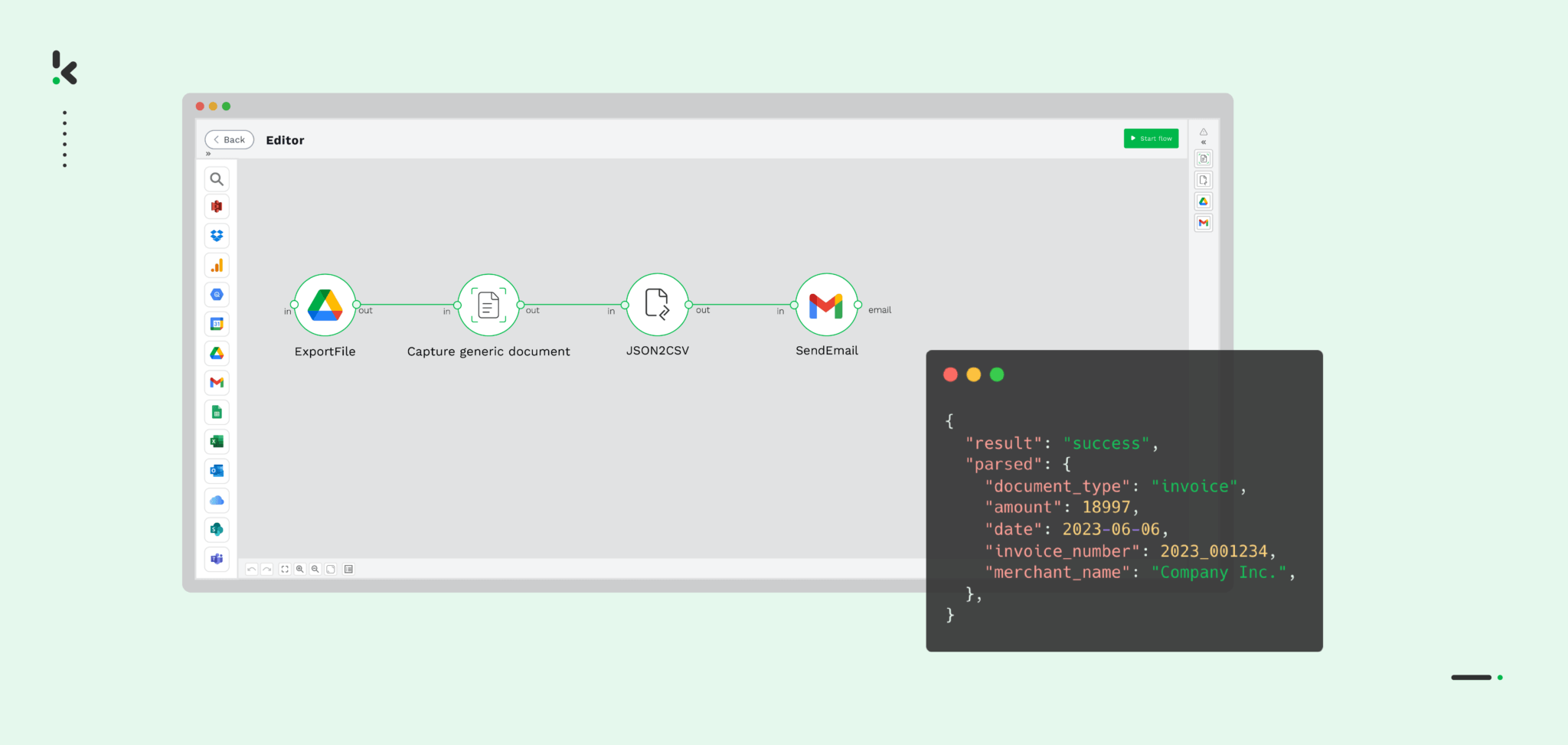
- Benefit from unlimited document support for all Latin alphabet languages. Process any document required for your use cases and customize data fields for extraction.
- Achieve 100% accuracy with human-in-the-loop. Simply define the conditions for an extra check, and assign your reviewers or entrust our team to verify the output.
- Create unique document workflows with an intuitive drag-and-drop interface. Select your input & output and connect any Doxis services relevant to your business.
- Out-of-the-box, our platform supports 50+ integration possibilities: cloud solutions, email providers for email parsing, CRM, ERP or accounting software, and more.
- Doxis is an ISO-certified and GDPR-compliant software provider, ensuring that all your data is handled securely while making you compliant by default.
With our onboarding team and documentation, it won’t take you long to get started. Book a demo below or contact us to begin your IDP journey.