


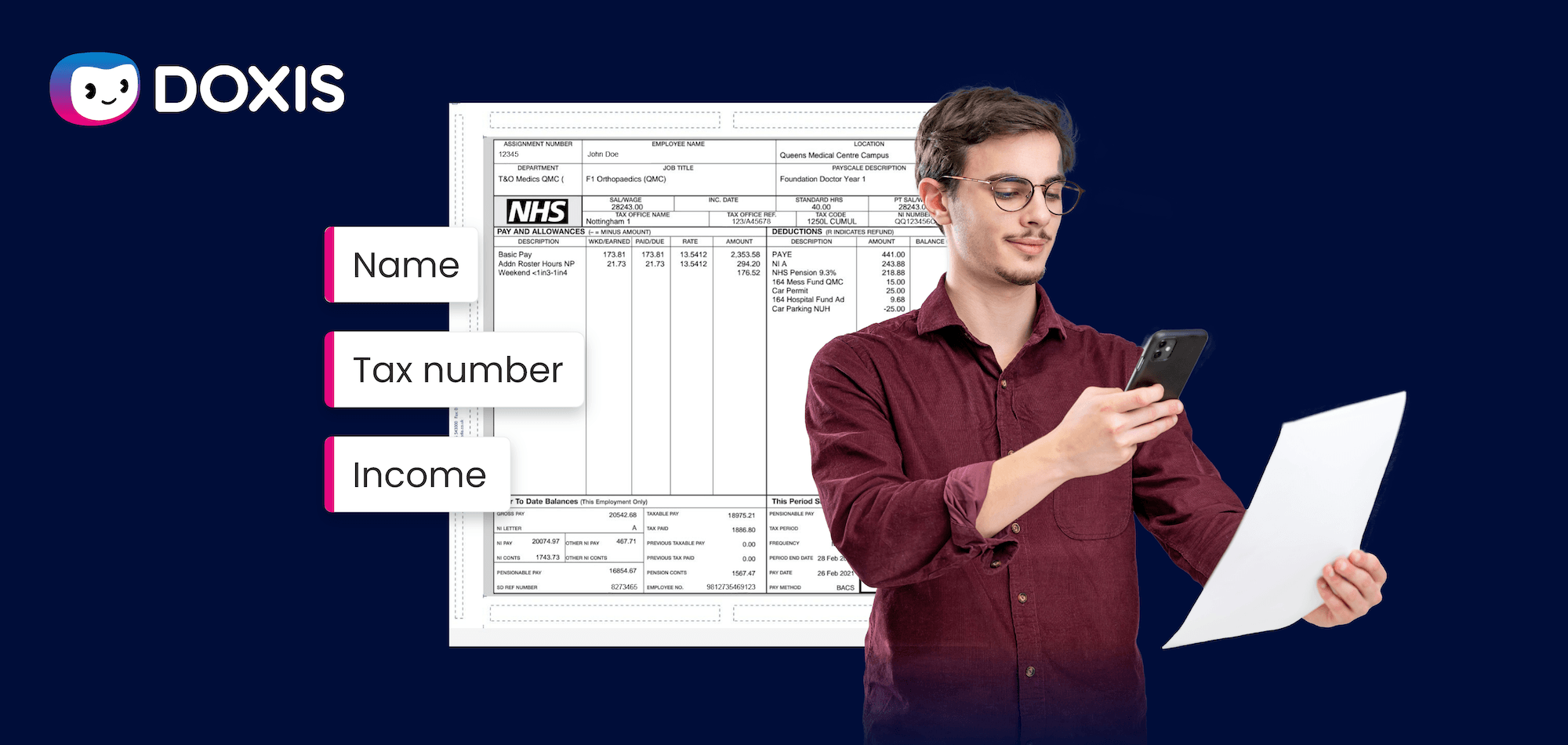
Payroll teams are under constant pressure to process sensitive employee data quickly and accurately. Yet 72% of companies say their payroll systems are not fully automated, meaning payroll teams still rely on manual data entry, spreadsheets, or disconnected workflows. When handling large volumes of payslips every pay cycle, these manual processes can quickly lead to delays, errors, and compliance risks.
This is where automated data extraction from payslips becomes valuable. Using OCR and AI-powered Intelligent Document Processing (IDP), businesses can automatically capture key payroll data from payslips and convert it into structured formats for payroll, HR, or accounting systems. In this article, you’ll learn how automated payslip data extraction works, its benefits, and how your business can implement it to streamline payroll processing.
Key Takeaways
- Payslip data extraction is the process of automatically capturing key payroll information from payslips and converting it into structured formats such as JSON, CSV, or Excel.
- Many organizations still rely on manual payroll processes, 72% of companies report their payroll systems are not fully automated, meaning payroll teams often depend on spreadsheets or manual data entry.
- Automated payslip extraction uses technologies like OCR, Artificial Intelligence (AI), and Intelligent Document Processing (IDP) to read and structure payroll documents.
- Businesses can automatically extract important data fields such as employee details, gross salary, deductions, taxes, and net pay from payslips.
- AI-powered OCR platforms like Doxis AI.dp help organizations reduce manual data entry, improve accuracy, and process large volumes of payroll documents efficiently.
What is Payslip Data Extraction?
Payslip data extraction is the process of automatically identifying and capturing key information from payslips and converting it into structured, machine-readable data.
A payslip is a document issued by an employer that summarizes an employee’s earnings for a specific pay period, including salary, deductions, taxes, and net pay. Organizations generate these documents every payroll cycle, often in large volumes and in different formats such as PDFs, digital documents, or scanned files.
Instead of manually reviewing each payslip and entering the information into spreadsheets or payroll systems, automated extraction tools can capture the relevant data instantly. Using technologies like Optical Character Recognition (OCR) and Artificial Intelligence (AI), these tools convert unstructured payslip data into structured formats such as JSON, CSV, or Excel.
This allows businesses to process payroll documents faster, replace manual data entry, and integrate payslip data directly into payroll, HR, or accounting systems.
Why Manual Payslip Data Entry Is Inefficient
Despite increasing digitalization in payroll systems, many organizations still rely on manual processes when handling payslips. Teams often review documents one by one and retype key information into spreadsheets, payroll platforms, or accounting systems. While this approach may work for small volumes, it quickly becomes inefficient as the number of employees and documents grows.
1. Time-Consuming Processes
Manually extracting data from payslips requires reviewing each document and entering multiple fields individually. For organizations processing hundreds or thousands of payslips every pay cycle, this repetitive work can consume hours of valuable time that payroll and HR teams could spend on more strategic tasks.
2. Human Errors in Payroll Data
Manual data entry inevitably introduces errors. Even small mistakes, such as entering the wrong salary amount, deduction value, or employee ID, can lead to payroll discrepancies, reporting inaccuracies, and time-consuming corrections.
3. Compliance and Reporting Risks
Payroll data must often be reported to tax authorities, auditors, and internal finance teams. Incorrect or incomplete data increases the risk of compliance issues, inaccurate tax filings, or audit complications. Ensuring accuracy through manual checks alone can be difficult and resource-intensive.
4. Limited Scalability
As companies grow, so does the volume of payroll documents. Manual workflows struggle to scale efficiently when organizations process thousands of payslips across multiple departments, entities, or countries.
For these reasons, many businesses are turning to automated payslip data extraction, which significantly reduces manual work while improving accuracy and efficiency.
How Automated Payslip Data Extraction Works
Automated payslip data extraction uses technologies such as OCR, AI, and IDP to convert payroll documents into structured data. Instead of manually reviewing each payslip, these technologies automatically read the document, identify relevant fields, and export the extracted information to other systems.
The process typically follows a few key steps.
1. Upload or Capture Payslips
The process begins by submitting payslips to the extraction system. Documents can be uploaded in various formats, including PDFs, images, or scanned documents. Many platforms also allow organizations to process large batches of payslips at once.
2. OCR Extracts Text from the Document
Once the payslip is uploaded, OCR technology scans the document and converts the visible text into machine-readable data. This allows the system to recognize characters, numbers, and words from both digital files and scanned documents.
3. AI Identifies and Classifies Key Data Fields
After the text is extracted, AI models analyze the document structure and identify specific data fields within the payslip. These may include information such as employee names, salary components, deductions, tax details, and net pay.
Unlike traditional OCR, AI-powered systems understand the context and layout of payroll documents, allowing them to accurately capture relevant fields even when payslip formats differ.
4. Data Validation and Formatting
Once the data is extracted, the system can automatically validate and structure the information. For example, it can check whether salary values are formatted correctly or match predefined validation rules.
The extracted data is then converted into structured formats such as JSON, XML, CSV, or Excel, making it easier to process and analyze.
5. Export to Payroll or Business Systems
Finally, the structured data can be sent directly to payroll software, HR systems, accounting tools, or ERP platforms through integrations or APIs. This allows organizations to automatically incorporate payslip data into their existing workflows without manual data entry.
By automating these steps, businesses can significantly reduce processing time, improve data accuracy, and scale payroll operations more efficiently.
Key Data Fields That Can Be Extracted from Payslips
Payslips contain a wide range of payroll and employment information. With automated payslip data extraction, organizations can capture these data points automatically and convert them into structured formats for further processing.
While the exact fields may vary depending on the payslip format, most capturing software can extract the following categories of information.
1. Employee Information
2. Employer Information
3. Payroll Period Information
4. Salary and Compensation Details
5. Deductions and Taxes
6. Net Pay and Totals
Common Use Cases for Automated Payslip Data Extraction
Automated payslip data extraction is used across multiple industries where organizations need to process payroll documents quickly and accurately. By turning unstructured payslip data into structured information, businesses can streamline verification, reporting, and compliance workflows.
Below are some of the most common use cases.
1. Income Verification for Lending
Banks and financial institutions often require proof of income when evaluating loan or credit applications. Instead of manually reviewing payslips submitted by applicants, automated extraction tools can verify salary payslip details, employer information, and pay periods instantly.
This speeds up credit decision processes while reducing manual document review.
2. Payroll and HR Automation
HR departments frequently need to process large volumes of payroll documents. Automated payslip extraction allows teams to capture salary data, deductions, and employee information and sync it directly with payroll or HR systems.
This reduces administrative workload and ensures payroll data remains consistent across platforms.
3. Tax Preparation and Financial Reporting
Accounting and finance teams often rely on payroll data for tax filings, financial reporting, and budgeting. By automatically extracting key values such as gross pay, tax deductions, and year-to-date totals, organizations can prepare reports faster and reduce the risk of manual errors.
4. Compliance and Auditing
Regulators and auditors may require companies to verify that payroll practices comply with labor laws, minimum wage regulations, or tax requirements. Automated payslip data extraction helps organizations quickly analyze payroll records and identify potential discrepancies.
This improves transparency and simplifies the auditing process.
5. Insurance and Claims Processing
Insurance companies sometimes require proof of income when evaluating claims related to disability, unemployment, or income protection. Extracting payslip data automatically allows insurers to verify income details quickly and determine eligibility more efficiently.
Challenges of Payslip Data Extraction
While automated payslip data extraction can significantly improve payroll workflows, extracting accurate information from payroll documents is not always straightforward. Payslips can vary widely in structure, quality, and language, which creates several challenges for organizations that process them at scale.
1. Different Payslip Formats
Unlike standardized financial documents, payslips often vary in layout depending on the employer, payroll software, or country. The position of key fields such as gross salary, deductions, or tax details may differ from one document to another.
Without intelligent document processing technology that can understand document structure, extracting consistent data across different payslip formats can be difficult.
2. Low-Quality or Scanned Documents
Many organizations still work with scanned payslips, photos, or low-resolution PDFs. These documents may contain blurred text, shadows, or distortions that make it harder for traditional OCR tools to read the information accurately.
Advanced OCR solutions with image enhancement and machine learning capabilities are often required to reliably process these types of documents.
3. Multi-Language Payroll Documents
Companies that operate internationally often deal with payslips in multiple languages and regional formats. Payroll terminology, tax labels, and salary components can vary across countries, making it harder to identify and extract the correct fields without multilingual document processing capabilities.
4. Sensitive Payroll Data and Security Requirements
Payslips contain highly sensitive personal and financial information, including salaries, tax numbers, and employee details. Organizations must ensure that any extraction process complies with strict data privacy and security regulations, such as GDPR or other regional data protection laws.
For this reason, businesses need extraction solutions that prioritize secure data handling, encryption, and compliance standards.
Understanding these challenges is essential when selecting a payslip extraction solution. Modern AI-powered OCR and Intelligent Document Processing platforms are specifically designed to overcome these obstacles and deliver accurate, scalable payroll data extraction.
Benefits of Automating Payslip Data Extraction
Automating payslip data extraction offers significant advantages for organizations that process payroll documents regularly. By replacing manual data entry with AI-powered extraction, businesses can improve efficiency, accuracy, and scalability across their payroll and financial workflows.
1. Faster Payroll Processing
Automated extraction tools can process payslips in seconds, allowing organizations to handle large volumes of documents quickly. Instead of reviewing and entering data manually, payroll teams can automatically capture key information and move it directly into their systems.
This significantly reduces processing time during payroll cycles.
2. Higher Data Accuracy
Manual data entry increases the likelihood of errors such as incorrect salary amounts, deduction values, or employee identifiers. Automated extraction systems minimize these risks by consistently capturing data fields with high accuracy.
Improved accuracy helps ensure payroll records, financial reports, and tax filings remain reliable.
3. Reduced Operational Costs
Manual document processing requires significant time and labor, especially for organizations with large workforces. Automating payslip data extraction reduces the need for repetitive administrative tasks, allowing payroll and finance teams to focus on higher-value activities.
Over time, this can lead to substantial cost savings.
4. Improved Compliance and Reporting
Accurate payroll data is essential for tax reporting, audits, and regulatory compliance. Automated extraction ensures that payroll information is captured consistently and stored in structured formats, making it easier to generate reports and maintain compliance with financial regulations.
5. Fraud Detection and Prevention
Payslips are often used as proof of income in processes such as loan applications, insurance claims, or tenant screenings. Automated extraction tools can help detect inconsistencies or unusual data patterns in payroll documents, making it easier to identify potentially fraudulent or manipulated payslips.
By automatically validating extracted data against predefined rules or external databases, organizations can reduce the risk of document fraud and strengthen their verification processes.
6. Better Scalability
As organizations grow, the number of payroll documents they process increases. Automated solutions can handle thousands of documents without additional manual effort, making it easier for businesses to scale their payroll operations.
Choosing the Right Payslip OCR Software
Selecting the right payslip OCR software is essential if you want to automate payroll document processing reliably. While many tools offer basic OCR capabilities, not all solutions are designed to accurately extract structured payroll data from different payslip formats.
When evaluating payslip OCR software, it’s important to consider several key factors.
1. Accuracy and AI Capabilities
Payroll data requires a high level of accuracy. Basic OCR tools may only convert images into raw text, but they often struggle to identify the correct data fields within a document.
Modern solutions use AI-powered document processing to understand the structure of a payslip and correctly extract fields such as employee information, salary components, deductions, and net pay. This significantly improves extraction accuracy and reduces the need for manual corrections.
2. Support for Multiple Document Formats
Payslips can arrive in different formats, including PDF files, scanned images, and photos taken with mobile devices. The right software should be able to process all these formats without requiring manual preprocessing.
Batch processing capabilities are also important for organizations that handle large volumes of payroll documents.
3. Integration with Existing Systems
Extracted payroll data often needs to be transferred to other systems such as payroll software, HR platforms, accounting tools, or ERP systems. Choosing a solution with flexible integrations or APIs ensures that the extracted data can flow directly into your existing workflows.
This helps eliminate manual data transfers and improves overall process efficiency.
4. Security and Compliance
Because payslips contain sensitive personal and financial information, security should be a top priority. Reliable OCR platforms should offer strong data protection measures, encryption, and compliance with regulations such as GDPR.
Organizations processing payroll data should ensure their chosen solution follows strict security and privacy standards.
5. Scalability and Automation Features
As organizations grow, the number of payroll documents they process increases. A scalable payslip OCR solution should support large document volumes, automated workflows, and validation features to maintain accuracy as processing demands grow.
Many modern platforms now combine OCR with AI agents and intelligent automation to further streamline document processing workflows. If you want to explore how these technologies are evolving, you can also read our guide on the best data extraction software in 2026, where we compare some of the leading solutions available today.
Choosing the right solution ultimately determines how much time and manual effort your organization can eliminate from payroll document processing. In the next section, we’ll look at how Doxis DocHorizon enables businesses to automate payslip data extraction efficiently and securely.
Automate Payslip Data Extraction With Doxis
Manually processing payslips can quickly become time-consuming and error-prone, especially when payroll teams handle large volumes of documents every month. Doxis AI.dp helps businesses automate this process by using AI-powered OCR and Intelligent Document Processing (IDP) to extract structured data from payslips automatically.
Instead of manually entering payroll data into spreadsheets or systems, your team can upload documents and let the platform handle the extraction and processing.
Key Benefits of Automating Payslip Extraction with Doxis
With Doxis DocHorizon, your organization can:
- Automatically extract key payroll data from payslips using AI-powered OCR
- Capture fields such as employee information, gross salary, deductions, tax amounts, and net pay
- Achieve up to 99% data extraction accuracy, reducing manual corrections
- Process large volumes of payslips in bulk, improving payroll efficiency
- Convert extracted data into structured formats such as JSON, CSV, XML, or Excel
- Integrate with 50+ business tools, including HR systems, ERP platforms, and accounting software
- Support multiple document formats including PDF, JPG, PNG, and scanned payslips
- Automate complete document workflows, from data extraction to system integration
Secure and Compliant Payroll Data Processing
Because payslips contain sensitive employee information, Doxis ensures strong security and compliance standards:
- ISO-certified and GDPR-compliant infrastructure
- Secure document processing and encrypted data handling
- Hosted within secure European cloud environments
- Built-in validation features to improve data reliability
Curious to see what Doxis can do for your business? Book a demo or contact us to discover how Doxis DocHorizon can help you automate your payslip processing workflows.
FAQ
Payslip data extraction is the process of identifying and capturing key information from payslips and converting it into structured, machine-readable formats such as JSON, CSV, or Excel. This allows organizations to automatically process payroll documents instead of manually entering data.
2. What is payslip OCR?
Payslip OCR refers to the use of Optical Character Recognition (OCR) technology to read text from payslips, including scanned documents, PDFs, or images. OCR converts the text into digital data that can then be analyzed and structured by AI-powered document processing systems.
3. What data can be extracted from payslips?
Automated extraction tools can capture a wide range of payroll data fields, including:
Employee name and identification number, employer details, pay period information, gross salary and earnings, taxes and deductions, net pay, year-to-date totals, etc. These data points can then be exported into payroll, HR, or financial systems.
4. How accurate is automated payslip data extraction?
Modern AI-powered OCR solutions can achieve up to 99% data extraction accuracy, depending on document quality and system configuration. Advanced platforms use machine learning models that understand document layouts and validate extracted data fields.
5. Can OCR extract data from scanned payslips?
Yes. OCR technology is designed to read text from scanned documents, images, and PDFs. When combined with AI-powered document processing, OCR systems can accurately extract structured payroll data even from low-quality scans.
6. Is payslip data extraction secure?
Yes, when using a secure platform. Solutions like Doxis AI.dp follow strict security and compliance standards, including GDPR compliance, encryption, and ISO-certified infrastructure, to ensure payroll data is handled safely.