
Traditional OCR has helped digitize documents for decades, but it falls short with complex layouts, mixed formats, and anything beyond plain text. Tables lose structure, images and charts are ignored, and even small format changes can break templates.
In high‑volume environments like finance, healthcare, and logistics, these limits create costly bottlenecks. An invoice total may be misread because a table cell was dropped, or a delivery note might need manual review because OCR cannot handle a mix of handwriting and printed text.
Agentic document processing takes the next step. Powered by multimodal vision‑language models, it reads documents the way people do, understanding layout, context, and structure instead of only words. This enables template‑free extraction, self‑correction, and integration into automated workflows, often achieving pass‑through rates above 90%.
Key Takeaways
- Agentic document processing reads documents with full layout and context awareness
- Agentic OCR goes beyond text to interpret tables, images, and handwriting
- Agentic document extraction delivers structured, template‑free outputs ready for automation
- It adapts to new formats without retraining or manual template updates
- Structured outputs support compliance and audit requirements
- Integrates directly with ERP, CRM, and other workflow automation systems
What Is Agentic Document Processing?
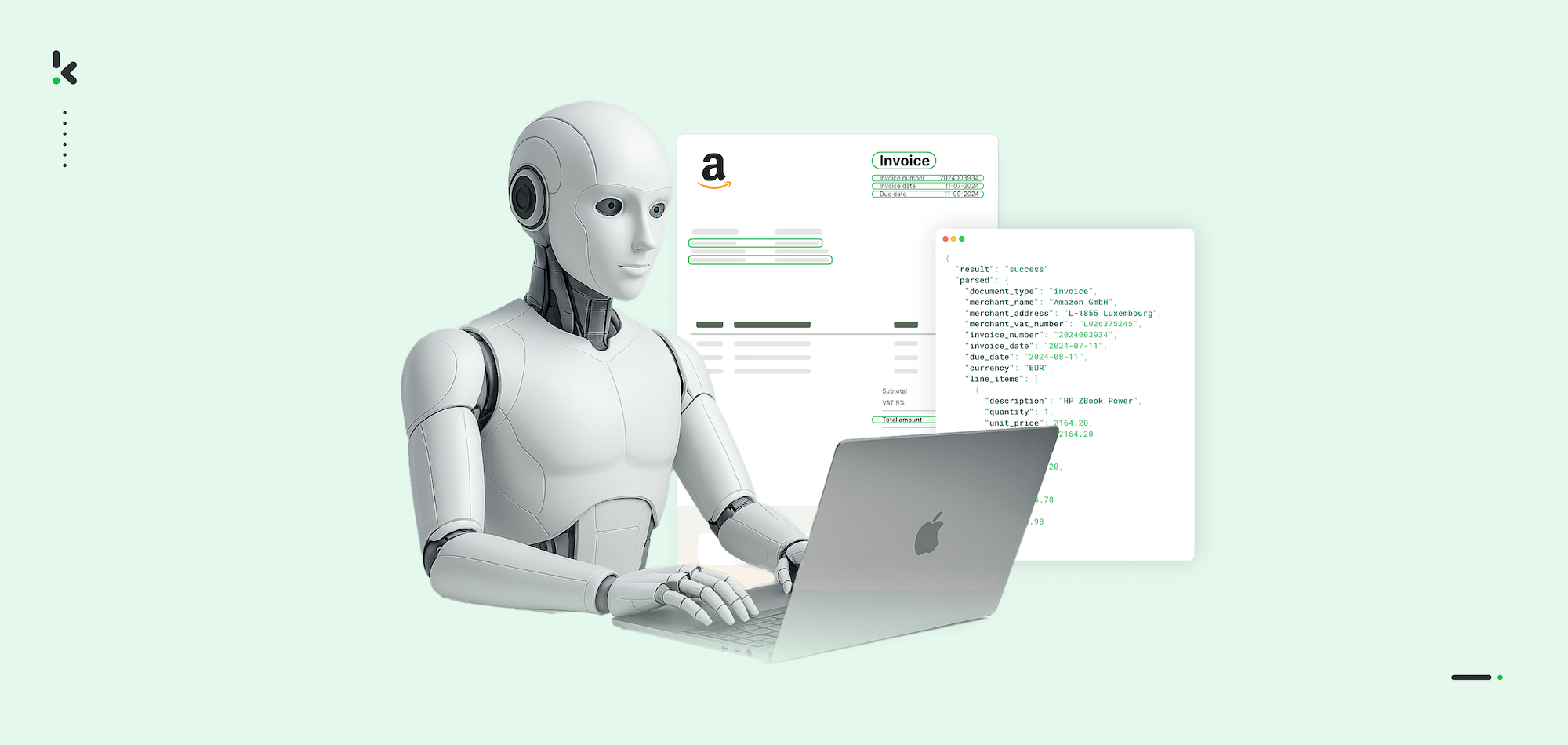
Agentic document processing is an advanced approach to processing documents that combines vision‑language AI models with autonomous workflows. Instead of simply converting scanned text into digital characters, it interprets the full document layout, understands relationships between elements, and reasons about the context to extract the most relevant information.
Where traditional optical character recognition focuses on text recognition, agentic OCR reads like a human would. It identifies tables, images, charts, headers, and form fields, preserving their structure and meaning. It also uses AI-powered document extraction to output structured data in formats such as JSON.
By removing the need for templates or retraining for each new file layout, agentic document processing can handle a wide range of document types, from handwritten medical forms to complex financial statements.
Traditional OCR vs. Agentic Document Processing
Traditional OCR reads characters from scanned documents or images and turns them into editable text, but it does not understand structure, relationships, or context. As a result, it often struggles with real‑world documents that contain variable layouts, mixed content types, or non‑linear formats.
Key limitations of traditional OCR:
- Requires fixed templates or retraining with new document layouts
- Struggles with tables, charts, and multi‑column formats
- Ignores important visual elements such as checkboxes, diagrams, or embedded images
- Produces flat text outputs with no structural metadata
- Has low pass‑through rates when document formats are inconsistent
- Offers limited integration with downstream workflows
Agentic document processing addresses these challenges by using multimodal AI models that understand both the visual layout and the meaning of each element on a page. It adapts to varied formats without templates, processes tables and graphics without losing structure, and can handle handwritten or mixed‑type content.
The output is delivered as structured, machine‑readable data such as JSON or XML and often includes visual grounding for auditability.
Advantages of agentic document processing:
- Template‑free processing that adapts automatically to new formats
- Preserves full document structure, including tables, charts, and form fields
- Processes text, images, handwritten notes, and diagrams in one workflow
- Includes self‑checking and re‑processing to improve accuracy
- Achieves pass‑through rates above 90%, even with diverse documents
- Integrates directly with ERP, CRM, and other business systems to automate workflows
By moving from traditional OCR to agentic document processing, companies gain higher accuracy and the ability to automate complex workflows that were previously dependent on manual review.
How Agentic Document Processing Works
Agentic document processing uses a sequence of intelligent steps to turn unstructured or complex documents into structured, validated data that can flow directly into business systems. It goes beyond simply reading characters on a page by interpreting the layout, understanding context, and applying reasoning to ensure accuracy.
1. Document input
Files are collected from multiple sources, such as email inboxes, cloud storage, ERP systems, or scanning devices. The system accepts varied formats, including PDFs, images, Word files, and scanned images.
2. Layout and structure analysis
The document is treated as a visual object, not just a block of text. The system identifies elements such as tables, headings, paragraphs, charts, images, form fields, and checkboxes, while preserving their relationships and reading order.
3. Data extraction
Using vision‑language models, the system captures relevant text and visual elements along with their structure. This includes line items in tables, form responses, amounts in charts, or even handwritten annotations. Extraction is template‑free, so new layouts do not require retraining.
4. Contextual reasoning and validation
The extracted data is evaluated for completeness and accuracy. The system can detect inconsistencies, missing values, duplicate data, or mismatches, then re‑process the source or flag the item for review. Some solutions use an agent loop, where the model attempts corrections until confidence thresholds are met.
5. Structured output creation
The final data is formatted into machine‑readable structures such as JSON, XML, or CSV files. Each extracted element can be linked back to its exact position in the original document for traceability and audits.
6. Integration into workflows
Validated data is sent directly to systems like ERP, CRM, or accounting software. This allows automated actions such as posting an invoice, updating a customer record, or triggering a compliance check.
By combining visual understanding with reasoning, agentic document processing can handle a wide range of document types and complexities while keeping accuracy rates high and manual involvement low.
Business Impact and Use Cases
Agentic document processing directly improves accuracy, speeds up workflows, reduces costs, and enables new levels of automation across industries. Interpreting both the content and the structure of documents. It provides organizations with reliable data they can act on without extensive manual review.
Key business impacts:
- Higher accuracy: Pass‑through rates often exceed 90%, meaning most documents are processed without manual intervention
- Faster cycle times: Complex documents are processed in minutes rather than hours or days
- Lower operational costs: Reduced need for template maintenance, retraining, and manual correction
- Better compliance: Structured outputs with visual grounding make audits easier and ensure data traceability
- Scalability: Handles growing document volumes and varied formats without impacting speed or quality
Example use cases by industry:
Finance: Automatically extracts and validates data from invoices, bank statements, contracts, and loan documents. Supports tasks like invoice reconciliation, regulatory reporting, and KYC document verification.
Healthcare: Processes patient intake forms, test results, and handwritten notes. Integrates outputs into electronic health records, reducing administrative workloads.
Logistics: Extracts shipment details from bills of lading, customs forms, and delivery documents. Streamlines inventory updates and customs clearance processes.
Legal and compliance: Reads contracts, identifies key clauses, and cross‑checks them against regulatory requirements. Maintains an audit trail with links to original document sections.
Insurance: Captures claim details from mixed‑format submissions, including forms, photos, and correspondence. Improves claim review time and document fraud detection.
How Klippa DocHorizon Can Help
Klippa DocHorizon is an intelligent document processing platform that is designed to bring the advantages of agentic document processing into your existing workflows.
By combining advanced OCR, AI-powered fraud detection, and document automation, Klippa DocHorizon delivers accurate, structured outputs from even the most complex documents.
Klippa DocHorizen offers:
- AI‑powered OCR: Reads documents as visual objects, interpreting tables, charts, forms, and mixed content while preserving structure.
- AI Agents for specialized workflows: AI agents that automate tasks such as data extraction, KYC verification, contract management, invoice processing, and document review.
- Template‑free document extraction: Adapts to varied document formats without the need for manual template creation or retraining.
- Automated validation: Flags missing, inconsistent or fraudulent data, re‑checks the source, and routes exceptions.
- Structured, audit‑ready outputs: Provides results in formats such as JSON or XML.
- Integration with business systems: Sends extracted and validated data directly to 200+ systems, such as ERP, CRM, accounting, or compliance platforms for end‑to‑end automation.
- Support for sensitive data handling: Includes security features such as encryption, role‑based access, and data anonymization to process documents containing personal or confidential information.
Whether you need to process financial statements, healthcare forms, compliance documentation or shipping documents, Klippa can help you move from traditional OCR to agentic document processing in a way that improves accuracy, increases efficiency, and scales with your business.
FAQ
It is an advanced AI‑driven approach that reads and understands both the structure and context of documents, allowing template‑free, high‑accuracy extraction and workflow automation.
Traditional OCR converts text from scanned images into editable characters but cannot preserve structure or context. Agentic OCR uses vision‑language models to interpret layout, relationships, and meaning, producing structured, ready‑to‑use data.
It is the process of capturing structured data from any document format, including tables, charts, images, and handwritten notes, without relying on predefined templates, often with visual grounding for auditability.
Yes. They can process mixed content including printed text, handwriting, and embedded visuals with high accuracy.
No. The technology adapts to new document layouts automatically, eliminating the need for manual template updates or retraining.
Agentic document processing can handle PDFs, scanned images, Office files, and structured or semi‑structured layouts across industries.
In many use cases, pass‑through rates exceed 90% without manual review.
By linking each extracted data point to its position in the source document, it ensures traceability and creates audit‑ready records.
Yes. Data outputs can be sent directly to platforms such as SAP, NetSuite, Microsoft Dynamics, and other workflow systems via API integration.
Yes. Modern platforms include features like encryption, role‑based access, and data anonymization to meet privacy and compliance requirements.