


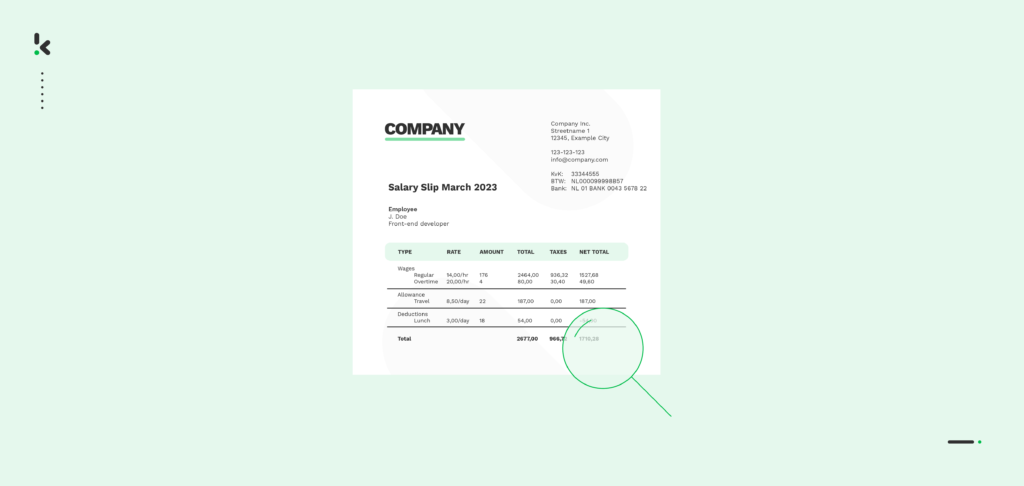
Spotting a fake pay stub comes down to checking for math errors, unrealistic figures, formatting inconsistencies, missing deductions, and employer details that don’t match trusted sources. AI-powered verification will make this process faster and more accurate.
Fraudulent pay stubs are increasingly used to misrepresent income and deceive lenders, landlords, and employers, creating financial losses, compliance breaches, and reputational damage. According to CoreLogic, income fraud rose 8.3% year-on-year.
These counterfeit documents often look convincing, but they fail under close inspection. Whether you verify manually or with AI-powered automation, recognizing common red flags is critical to prevent fraud from slipping through your processes.
Key Takeaways
- Fake pay stubs misrepresent income and are increasingly used to deceive lenders, landlords and employers.
- Common warning signs include formatting inconsistencies, perfectly rounded figures, missing company details, implausible pay dates, and lack of security features.
- AI-powered automation enables faster, more accurate verification using OCR, metadata analysis (EXIF), and intelligent document processing (IDP).
- Doxis AI.dp offers a powerful solution to automatically verify pay stubs, detect manipulation, and streamline document workflows through seamless integration.
What Are Fake Pay Stubs?
Fake pay stubs are counterfeit documents that falsely represent a person’s income and employment details. They typically include a name, address, employer information, salary, deductions and other financial data designed to look authentic.
People use fake pay stubs to deceive landlords, lenders or employers in order to qualify for housing, loans or jobs they might not otherwise be eligible for. These documents are often created with online generators or edited versions of genuine pay stubs, making them difficult to spot without careful inspection.
Two main methods are used to verify pay stubs:
- Manual verification involves visually examining the document, checking calculations, and confirming employer details directly.
- Automated verification uses tools such as Optical Character Recognition (OCR), metadata analysis and Intelligent Document Processing (IDP) to detect anomalies and cross-check information against trusted sources.
How to Manually Verify if a Pay Stub is Fake
Manual verification relies on careful inspection and cross-checking with trusted sources. To reduce the risk of fraud slipping through, follow these steps:
Check the math
Calculate gross pay minus deductions and confirm that the result matches the net pay shown. Even small discrepancies can be a red flag.
Look for rounded figures
Genuine payroll amounts often include cents. Perfectly round numbers, such as exactly $2,000 or $3,500, are uncommon.
Inspect formatting and spelling
Review the document for uneven columns, inconsistent fonts, blurry or low‑resolution logos, and spelling or grammar errors.
Confirm deductions
Verify that standard deductions like income tax, Social Security, and Medicare are present and realistic for the stated salary.
Check pay periods and dates
Ensure the pay dates align with business operations. Paydays on weekends or holidays, or identical pay periods across different jobs, are suspicious.
Research employer details
Search online for the employer’s name, address, and logo to confirm they match official records.
Contact the employer
Call the HR department using publicly listed contact information, not the phone number provided on the pay stub, to confirm the applicant’s employment.
Look for security features
Authentic pay stubs may include watermarks, holograms, or specific paper textures. Missing these features can indicate forgery.
Completing these checks consistently helps catch fraudulent documents before they cause financial or compliance problems.
How to Automatically Verify if a Pay Stub is Fake
Automated verification replaces manual inspection with AI‑powered software that process and analyse documents faster and more accurately. This approach reduces human error and scales easily, making it ideal for businesses reviewing large volumes of applications to prevent financial fraud.
1. Use OCR for Data Extraction
Optical Character Recognition software scans pay stubs and converts the content into machine‑readable text. This allows instant comparison of figures, deductions, and dates against trusted datasets such as bank records or tax documents.
2. Analyse Metadata for Signs of Editing
EXIF metadata analysis detects whether a pay stub has been altered in software like Photoshop. Changes to timestamps, file properties, or embedded images can reveal manipulation.
3. Apply Intelligent Document Processing (IDP)
IDP combines OCR, Artificial Intelligence, and machine learning to cross‑verify extracted data with employer databases or government records. It flags inconsistencies automatically for review.
4. Detect Formatting and Content Anomalies
AI‑enabled software identify subtle signs of forgery such as mismatched fonts, unusual alignment, missing deductions, or unrealistic net pay figures.
Why Businesses Prefer Automated Verification
Automating salary slip verification improves accuracy, speeds processing, reduces operational costs, enables compliance logging, and integrates easily into existing workflows. Doxis AI.dp offers AI‑enabled pay stub verification that detects manipulation within seconds, scales to handle thousands of documents daily, and integrates in less than one day through API or SDK.
Benefits of AI-Powered Pay Stub Verification
Leveraging technologies like AI, OCR, and machine learning brings undoubted benefits to a business. For example, discrepancies that human reviewers might miss can now be instantly detected, improving accuracy in identifying fake pay stubs.
Also, these technologies streamline the verification process, reducing the time and resources required for manual checks. We’ve put together a list of the key benefits automated pay stub verification has:
- Improved Compliance and Audit Readiness. Every verification is logged and standardized, ensuring consistency and making it easier to meet regulatory and audit requirements.
- Faster Processing Times. AI analyzes and verifies documents in seconds, drastically reducing the time spent on manual reviews and accelerating onboarding or approval workflows.
- Higher Accuracy and Fraud Detection. Advanced algorithms detect subtle signs of manipulation, such as inconsistent fonts, altered figures, or tampered metadata.
- Scalability Without Extra Resources. Whether you’re reviewing dozens or thousands of documents per day, AI scales effortlessly without requiring additional staff or infrastructure.
- Reduced Operational Costs. Automating verification lowers labor costs and reduces the financial risk of approving fraudulent documents, leading to significant long-term savings.
- Tamper Detection Through Metadata Analysis. AI inspects file properties, including EXIF data and timestamps, to uncover signs of digital manipulation or forgery.
- Better User Experience. Faster decisions mean quicker approvals for customers or applicants, resulting in smoother onboarding and increased satisfaction.
Automatically Verify Fake Pay Stubs With Doxis AI.dp
Doxis AI.dp is a document processing solution that uses AI-powered technology to detect manipulation in pay stubs and prevent document fraud. It combines Optical Character Recognition (OCR), metadata analysis, and Intelligent Document Processing (IDP) to verify authenticity in seconds.
Doxis AI.dp also validates documents against trusted sources such as employer databases and tax records. This ensures accuracy in detecting false information and prevents fraudulent pay stubs from slipping through onboarding or approval workflows.
With Doxis AI.dp, businesses can:
- Reduce operational costs by eliminating manual checks and approving applications faster.
- Detect manipulation quickly through automated analysis of formatting, figures, and embedded metadata.
- Process documents at scale without adding staff or infrastructure.
- Integrate seamlessly into existing systems using REST API or SDK
- Maintain compliance by logging every verification for audit readiness.
The result is a faster, more reliable, and compliant verification process that protects business integrity and improves customer experience.
Curious to find out how Doxis’ solution can help you take a stand against fraud? Get in contact with one of our experts or book a free demo below!
FAQ
The most reliable red flags include mathematical errors, perfectly rounded figures, formatting inconsistencies, missing or unrealistic deductions, identical pay periods across different jobs, implausible dates, typos and the absence of security features such as watermarks or holograms.
2. How can I manually verify if a pay stub is fake?
Check that gross pay minus deductions equals net pay, review all formatting and spelling, confirm standard deductions, inspect pay periods and dates, research employer details online and contact the HR department using publicly listed contact information.
3. How can I cross-check a pay stub against other documents?
Compare the net pay on the stub with bank statement deposits, verify figures against W‑2 tax forms, and ensure employer details match official records. Differences in calculations or missing data are strong indicators of fraud.
4. What digital tools can detect fake pay stubs?
AI-powered platforms such as Doxis AI.dp use OCR to extract text, metadata analysis to detect hidden edits and Intelligent Document Processing to cross‑check details with trusted databases.
5. Why is automated verification more reliable than manual checks?
Automation processes thousands of documents in seconds, eliminates calculation errors, detects subtle manipulations such as font changes or altered metadata and logs every verification for compliance.
6. How can businesses protect themselves from pay stub fraud?
Implement standard verification protocols, train staff to identify red flags, use AI‑driven verification tools and maintain audit logs for regulatory compliance.
7. Can Doxis AI.dp verify documents other than pay stubs?
Yes. Doxis AI.dp can verify bank statements, invoices, receipts, identity documents and other financial records, enabling end‑to‑end fraud prevention across multiple use cases.