


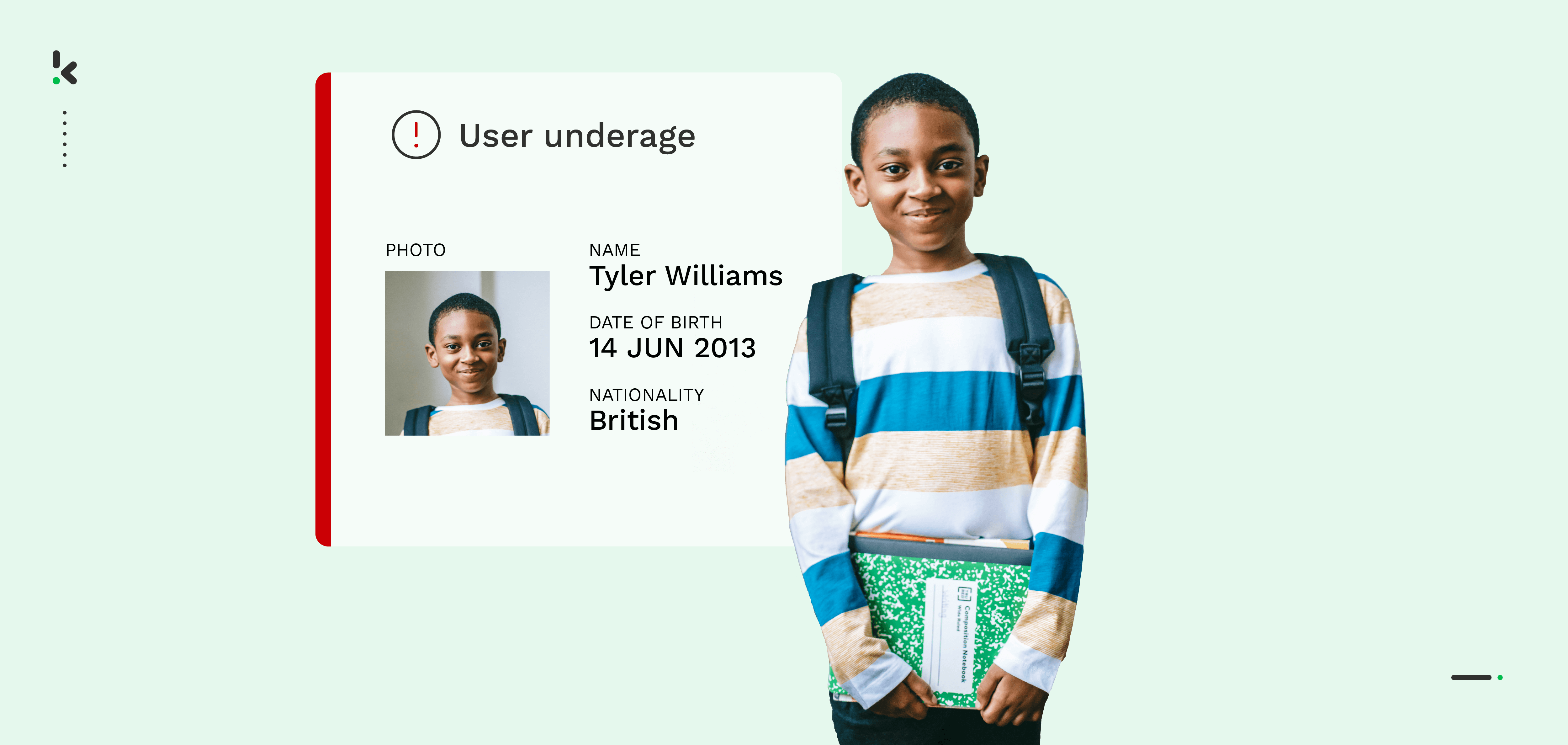
With screen time among teenagers hitting record highs, the digital landscape has shifted from “voluntary safety” to mandatory compliance. In 2025, the world saw a massive wave of legislation, from the UK’s Online Safety Act to a slew of US state mandates making age assurance a non-negotiable requirement for many online businesses.
As a business owner, navigating these laws can be a legal minefield. However, “age assurance” has evolved from a hurdle into a strategic tool that shields you from fines, builds user trust, and protects the next generation.
Why is age assurance becoming more important than ever?

Teenagers today are navigating a digital world that is more immersive and more regulated than ever before. In 2025, we saw a global “tipping point” where governments moved from suggesting safety measures to mandating them with heavy penalties.
The Rise of the “Always-On” Generation
While the 2024 statistics highlighted that teenagers aged 15-18 spent roughly 7.5 hours a day on screens, but in 2026 this has evolved into “integrated living.” Education, social life, and commerce now happen almost exclusively within apps. This deep integration has amplified two primary risk areas:
- AI-Generated Risks: The explosion of generative AI in 2025 led to an increase in sophisticated deepfakes and automated grooming bots. Simple age-gating is no longer enough to protect youth from AI-driven harmful content.
- The “Social Media Ban” Era: In late 2025, countries like Australia implemented landmark bans on social media for children under 16. This has forced platforms to move from passive age collection to active age assurance to avoid being de-platformed.
The Shift from “Consent” to “Verification”
For years, the internet operated on a “trust but don’t verify” model. However, recent legal precedents in the US and UK have established that businesses have a duty of care. If a minor accesses a platform meant for adults, the legal burden now falls on the business owner to prove they took “highly effective” steps to prevent it.
Key takeaway for 2026: Age assurance is no longer just a “nice-to-have” feature for social responsibility; it is a critical legal shield for any business operating in the global digital economy.
Types of Age Assurance Methods
Online platforms now use a mix of “Soft” (Estimation) and “Hard” (Verification) methods. The gold standard is Successive Validation, where a user is first given a low-friction option and only “stepped up” to an ID check if the system remains unsure.
1. Age Estimation (AI-Driven & Low Friction)
Instead of asking for a document, these systems use AI to guess a user’s age. This is the preferred first step for social media and gaming to reduce “user drop-off.”
- Behavioral Analysis: Algorithms monitor how a user interacts with a platform (e.g., typing speed, language patterns, or interest categories). If a user’s behavior deviates from their declared age, a “re-verification” is triggered.
- Facial Age Estimation: A user takes a 2-second video selfie. AI analyzes facial geometry to estimate age within a ±1.5-year margin of error. In 2026, these systems (like those used by Roblox and Instagram) are equipped with “Injection Attack Protection” to stop deepfakes.
2. Age Verification (Hard Identifiers)
Used for “High-Risk” categories like adult content, gambling, or high-value e-commerce (alcohol/tobacco).
- NFC Chip Scans: Users tap their passport or ID card against their smartphone. The platform reads the encrypted chip directly, making it nearly impossible to spoof with a fake physical document.
- EU Digital Identity Wallet (The “Mini-Wallet”): As of 2026, EU member states have begun rolling out standardized wallets. These allow users to share a “Zero-Knowledge Age Token”—proving they are “18+” without ever sharing their name or birthdate with the website.
- Open Banking: A secure API call to the user’s bank. The bank confirms the user is over 18 (based on their KYC records) without revealing any financial data.
3. Device & OS-Based Signals
This is the newest frontier in 2026. Rather than every website asking for your ID, your operating system (iOS, Android, or Windows) can provide a “Verified Age Signal.”
- If you’ve already verified your age with Apple or Google to set up your phone, the browser can pass a “Yes/No” signal to a website, making the process invisible to the user.
The 2026 VPN Reality: Regulators now require “Robust” checks because children often use VPNs to bypass geographic blocks. Modern age assurance is now “Identity-linked” rather than “IP-linked,” ensuring that a child in London can’t simply pretend to be an adult in a country with laxer laws.
The Benefits of Age Assurance for Online Platforms
For the Seller: Legal “Safe Harbor” & Liability Shield
In the current regulatory climate, being “unaware” that minors are on your platform is no longer a valid legal defense.
- Fines as a Percentage of Revenue: Under the EU’s Digital Services Act (DSA) and the UK’s Online Safety Act, fines for failing to protect minors can reach 6% to 10% of global annual turnover. Robust age assurance acts as your primary insurance policy against these catastrophic penalties.
- The “Highly Effective” Standard: By using certified tools (like those that meet the 2025 Ofcom guidelines), businesses gain Legal Safe Harbor. If a highly sophisticated bad actor bypasses a “highly effective” system, the platform is generally protected from liability, whereas a platform using simple age-gating would be held fully responsible.
- Automated Fraud Prevention: 2026-era age assurance tools do more than check dates; they detect AI-generated IDs and deepfakes. This prevents “synthetic identity fraud,” where bots create thousands of fake adult accounts to scrape data or manipulate your marketplace.
For the Buyer: Privacy-First User Experience
The biggest shift in 2026 is the death of the “creepy ID upload.” Modern buyers demand privacy-preserving verification.
- Zero-Knowledge Proofs (ZKP): Using methods like the EU Mini-ID Wallet, users can prove they are “Over 18” without your platform ever seeing their name, address, or face. This “Yes/No” signal satisfies the law while giving the user total anonymity.
- Reduced Friction with “Verify Once, Use Everywhere”: Through 2025’s interoperability standards, a user who verifies their age once on their device (iOS/Android) can browse multiple restricted sites seamlessly. The “Verified Age Token” is passed automatically, eliminating the need for repetitive, annoying checks.
- Safety as a Premium Feature: In social and dating apps, “Age Verified” badges have become a symbol of status and safety. Users are 40% more likely to engage with other verified accounts, driving higher retention and platform value.
For the Brand: Advertiser & Investor Confidence
In 2026, the world’s largest advertisers (the “Global Alliance for Responsible Media” standards) refuse to place ads on platforms that cannot prove their audience age demographics with certified data.
- Clean Data Rooms: Accurate age assurance ensures your analytics are “clean.” You aren’t wasting marketing spend on minors who cannot legally purchase your product, and you aren’t showing age-restricted ads to children, which triggers immediate “Brand Safety” flags for major advertisers.
- Investor Relations: For tech startups, “Safety by Design” is now a key metric in VC due diligence. Platforms that built-in age assurance from day one are valued higher than those facing the “technical debt” of retrofitting safety features under government pressure.
How to Comply with 2026 Regulations
The regulatory map is now a patchwork of regional “Highly Effective” standards. To stay operational, businesses typically follow the Global Gold Standard (usually defined by the EU and UK), which covers most other jurisdictions.
1. The European Union: Digital Services Act (DSA) & The “Mini-Wallet”
The EU has moved beyond just the GDPR.
- The Age Verification Blueprint: In July 2025, the European Commission released a standardized “blueprint” for age checks. By 2026, platforms are expected to accept the EU Digital Identity Wallet.
- Requirement: Platforms must allow users to verify their age using these wallets. The process is “double-blind”—you receive a digital token confirming the user is 18+, but you never see their actual ID.
- Penalty: Non-compliance can lead to fines of up to 6% of global annual turnover.
2. The United Kingdom: Online Safety Act (OSA)
As of late 2025, the UK’s Ofcom began full enforcement of “Highly Effective” age assurance.
- The “Pornography Deadline”: By July 2025, all adult sites were required to implement hard verification (ID or bank-based).
- Categorized Services: By early 2026, “Category 1” services (large social media) must have completed their Children’s Risk Assessments. If your platform is “likely to be accessed by children,” you must prove you have “highly effective” barriers to prevent them from seeing “Priority Harmful Content.”
3. The United States: The State-Level Wave & COPPA 2.0
The US landscape is the most complex due to a split between federal and state laws.
- COPPA 2.0 (The 2025 Amendments): The FTC updated the Children’s Online Privacy Protection Act. Key change: It now includes biometric identifiers in its definition of personal info and expands protections for teens up to age 16 (not just under 13).
- The State Mandates: As of January 2026, over 25 states have active age verification laws.
- Utah & Louisiana: Require government ID or “highly reliable” systems for social media.
- California (SB 976): By late 2026, social media apps must use age assurance to prevent providing “addictive feeds” to minors during school hours and late at night (curfews).
- App Store Enforcement: Many US states now hold Apple and Google responsible for verifying age at the device level, meaning your app might receive a “Verified Age Signal” directly from the operating system.
4. Australia: The Under-16 Social Media Ban
On December 10, 2025, Australia became the first nation to implement a total ban on social media for children under 16.
- If you operate a social platform in Australia, “estimation” is no longer enough; you must use hard verification to prove a user is 16+ or face massive civil penalties.
Protect Your Platform with Doxis’ Age Verification Solution
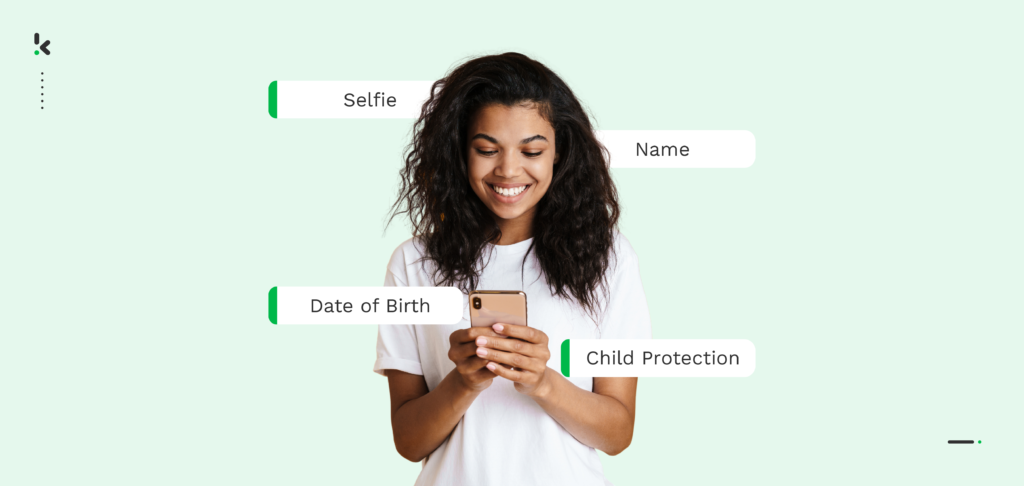
Doxis’ ID verification solutions offer a robust and safe solution for age verification for online platforms. Our solution is designed to seamlessly confirm the ages of your users while prioritizing user privacy and regulatory compliance.
Doxis streamlines age verification across a vast range of regions, making it simple to verify users’ ages from over 150+ countries. Using cutting-edge AI technology, it efficiently captures, organizes, extracts, and anonymizes the necessary data from ID documents, ensuring a swift and reliable verification process.
Next to Age Verification, Doxis can also be your partner for all of your ID verification needs. Here are a few features of our product:
- ID document verification: Verify the authenticity of an individual’s identity documents, such as ID cards, passports or driver’s licenses.
- Detect document fraud: Identify forged or counterfeit documents used for identity verification, enhancing security and trust.
- Liveness detection: Ensure that a live person, rather than a static image or video, is present during identity verification, preventing spoofing.
- Selfie verification: This method requires individuals to take a selfie for identity verification, often compared to a reference photo to confirm their identity.
- Data anonymization: Protect customer data from unauthorized access or exposure by concealing or encrypting sensitive information.
- NFC checks: NFC (Near Field Communication) checks use wireless technology to verify the authenticity of identity documents or devices, enhancing security and reducing the risk of fraud.
Doxis’ solutions are very easy to integrate into existing software through our APIs or SDKs.
If you are curious about our solutions or want to see it in action please book a demo with one of our experts below. Start enhancing security, compliance, and user trust across your online platform.
FAQ
In 2026, age assurance is a comprehensive digital framework used to determine or estimate a user’s age to ensure compliance with global regulations like the UK’s Online Safety Act (OSA) and the EU’s Digital Services Act (DSA). It protects minors from harmful content while allowing platforms to maintain legal safe harbor.
Modern age assurance utilizes a tiered approach:
1. Age Estimation: AI-driven facial analysis or behavioral patterns that provide a probable age range without requiring documents.
2. Age Verification: Robust checks using government-issued IDs, NFC chip scans, or secure third-party “age tokens” from digital wallets for factual certainty.
Regulators now mandate “highly effective” age assurance for restricted content. Effective verification prevents underage access to adult material and protects platforms from catastrophic fines, which can reach up to 6% of global annual turnover under the DSA.
Beyond legal compliance, it boosts advertiser confidence by ensuring brand safety and audience accuracy. It also improves user retention by offering frictionless, privacy-preserving verification methods like the EU Digital Identity Wallet.
This is a technical standard set by regulators (e.g., Ofcom) requiring methods to be technically accurate, robust, and difficult to circumvent. In 2026, this excludes simple self-declaration boxes and moves toward verified identity signals.
Compliance is risk-based. High-risk platforms (adult content, gambling) require hard verification. Social media and lower-risk sites may use “soft” estimation methods as a first line of defense, only escalating to full verification if the user’s age is unclear.
As of 2026, platforms must be technically interoperable with the EU’s “Mini-Wallet”. This allows users to share an “age token” (proving they are 18+) directly from their device, satisfying legal requirements without the platform storing sensitive ID data.
Yes. Modern solutions utilize “Zero-Knowledge Proofs,” where the platform only receives a “Yes/No” age confirmation. All personal data used for the check is anonymized or deleted immediately following the verification to comply with GDPR and local privacy laws.