


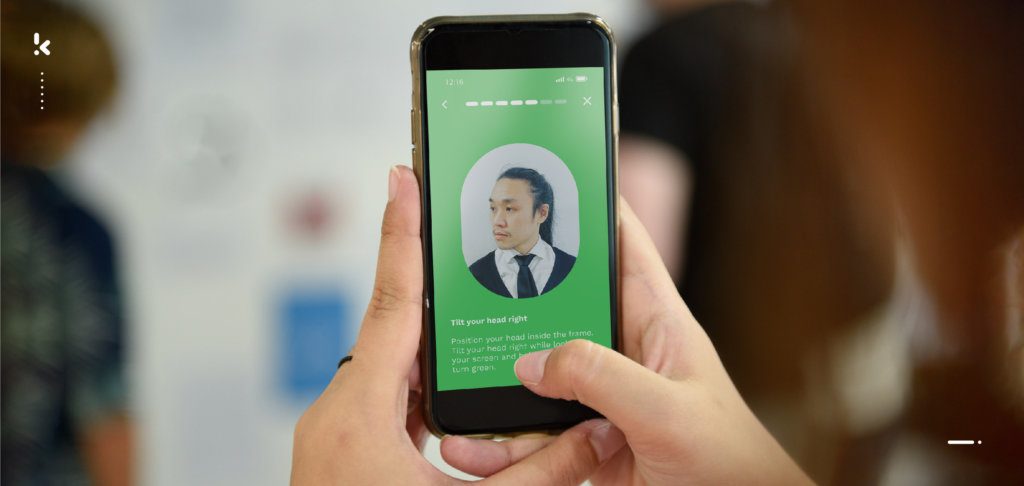
Identity verification processes often rely on static biometric data, such as fingerprints or facial features, to confirm a person’s identity. However, this approach can be vulnerable to spoofing attacks, where an attacker uses a replica of a person’s biometric data (such as a photograph or a mold of their fingerprint) to gain access to their account.
Next to that, users can use a pre-recorded video of a person to bypass the identity verification process. That’s where liveness detection comes in. It minimizes the use of synthetic identity documents as it shields off any spoofing attempts with authentication done in real-time. With liveness detection, organizations can better protect themselves from fraudsters.
In this blog, we will learn what liveness detection is, the different types, and why you should implement it to prevent identity fraud. So let’s start!
What is Liveness Detection?
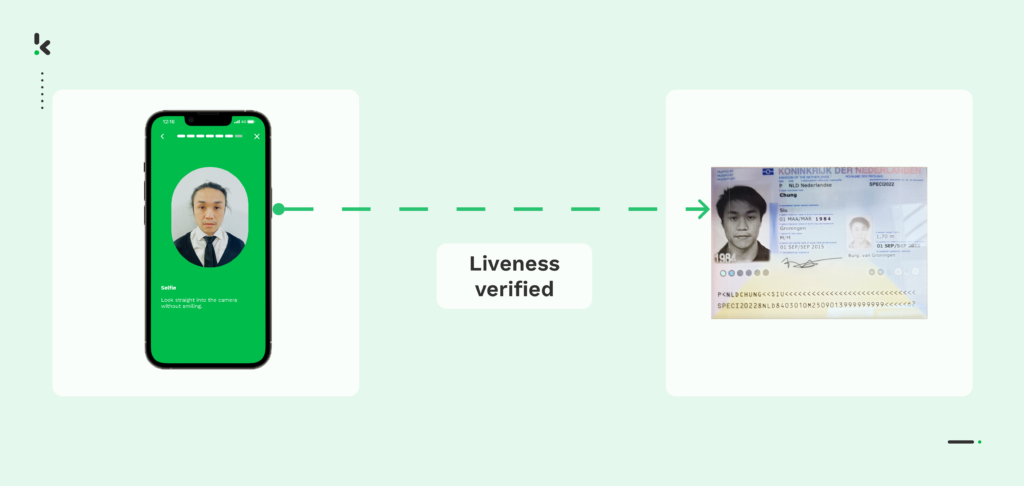
Liveness detection is an authentication technique to verify that a person is physically present during an identity verification process and not using a fake source of a biometric sample such as a photo or a video.
Liveness detection is used to prevent identity spoofing, which is an attempt by a fraudster to gain unauthorized access to services or systems, for example, by using synthetic identities.
To make use of liveness detection, the latest AI technologies need to be in place. These technologies include:
- Deep learning algorithms are used to detect subtle differences between a live person and a photograph or a pre-recorded video.
- Computer Vision is used to detect movement, facial features, and expressions.
- Other AI (Artificial intelligence) technologies are used to detect patterns in the data and identify any anomalies that may indicate a spoofing attack.
With the AI technologies mentioned above, liveness detection provides an additional layer of security to biometric authentication and identity verification software.
Now, let’s take a look at the different types of liveness detection.
Difference Between Active Liveness Detection and Passive Liveness Detection
Liveness detection can be done by 2 different methods:
- Active liveness detection
- Passive liveness detection
Active liveness detection
Active liveness detection is a form of biometric authentication that requires a user to actively perform a specific action in order to verify their identity. Such actions can include blinking, nodding, head movements, facial expressions, or even speaking a specific phrase. With active liveness detection, the risks of synthetic identity fraud or identity spoofing in identity verification processes are significantly minimized.
Active liveness detection is becoming increasingly popular and widely used in consumer applications, such as banking and e-commerce websites, for onboarding processes or to provide a more secure way for users to access their accounts. As businesses increasingly rely on online operations, active liveness detection will become even more important in ensuring the security of systems and devices.
Passive Liveness Detection
Passive liveness detection is a method of liveness detection that does not require the user to actively perform any specific action. It is based on the idea of recognizing a person’s unique facial features such as the shape of the face, and the distance between their eyes, and comparing them to a stored image or with the picture of their ID document taken in real-time.
The difference between passive liveness detection and active liveness detection is that passive liveness uses one selfie or picture, while active liveness requires users to actively perform a specific action.
Oftentimes, passive liveness is combined with active liveness detection and other identity verification methods such as NFC to make authentication and identity verification processes more secure and robust.
But how does liveness detection work in identity verification processes? Let’s take a look.
How Does Modern Liveness Detection Work?
Modern liveness detection goes beyond simple movement. It utilizes Presentation Attack Detection (PAD) to distinguish between human skin and synthetic materials (like silicon masks or high-resolution screens).
- Anti-Injection Defense: Sophisticated liveness software now monitors the device’s hardware to ensure the video feed is coming directly from the camera, preventing “injection attacks” where a pre-recorded deepfake is fed into the system via software.
- Texture & Depth Analysis: AI analyzes the micro-textures of the human face. A screen or a photo lacks the 3D depth and pore-level detail of a real person.
- Reflectance & Light Sensing: Some systems use the smartphone screen to flash specific colors onto the user’s face. The way that light reflects off human skin is different from how it reflects off a mask or a digital screen.
Liveness detection is a powerful method for preventing identity theft and spoofing, which comes with various benefits uncovered in the next section.
Why Use Liveness Detection?
There are multiple reasons why you should use liveness detection in your identity verification process. Below, we list the main benefits:
- Greater security: Liveness detection makes sure that the person being recognized is truly there and is not using synthetic identity documents or pre-recorded videos to bypass the verification process.
- Deepfake Defense: Specifically engineered to detect the “uncanny valley” anomalies found in AI-generated videos and real-time face-swaps.
- Increased precision: Liveness detection uses advanced biometric technology to accurately identify and authenticate users.
- Reduced fraud: Liveness detection helps reduce the risk of fraud and illegal access to private data and services.
- Improved user experience: Liveness detection contributes to giving the user a smoother and safer login experience, as no video call is needed for human verification.
- Regulatory Compliance (ISO/IEC 30107-3): Meet the global standards for biometric security. Using liveness detection helps your business stay compliant with evolving Anti-Money Laundering and KYC regulations worldwide.
Intelligent Liveness Verification with Doxis
At Doxis, we are aware of how challenging it is to scale up and safely onboard clients in an era of AI-driven fraud. As digital customer onboarding becomes the global standard, companies must ensure they stay ahead of sophisticated threats like deepfakes and automated spoofing to remain compliant and protect their users.
Your client onboarding, online check-ins, and compliance checks can be simplified using Doxis’ automated identity verification. Doxis replaces the manual process of scanning, reading, and categorizing identification documents such as passports, ID cards, and driver’s licenses with real-time, AI-powered accuracy.
To protect yourself from fraud and stay compliant with Anti-Money Laundering (AML) and Know Your Customer (KYC) regulations, you can use our liveness detection software, which utilizes both active and passive liveness detection. Say goodbye to spoofers!
Next to face liveness detection, you can complement your identity verification process with additional security layers:
Our solutions are available via API and SDK with proper documentation, so you can incorporate them into your own solution with ease. Wouldn’t you want to improve your business processes while safeguarding identity verification against criminal activity? With Doxis’ identity verification solution, this is possible.
All you need to do is book a demo below, where we walk you through our solution. If you want more information, you can always contact our experts.
FAQ
In 2026, liveness detection is a sophisticated AI-driven security layer used to verify that a person is physically present during a digital interaction. It distinguishes real human biological traits from artificial replicas like high-resolution photos, 3D masks, and real-time deepfakes created by Generative AI.
The main difference lies in user interaction:
1. Active Liveness: Requires the user to perform a “challenge-response” action, such as nodding, blinking, or speaking a random phrase.
2. Passive Liveness: Works invisibly in the background by analyzing skin texture, light reflection, and micro-expressions without requiring any action from the user, offering a much smoother experience.
Yes. Modern liveness detection is specifically designed to identify “synthetic artifacts” that are invisible to the human eye. It looks for inconsistencies in 3D depth, blood flow (photoplethysmography), and how the device’s light reflects off the skin—details that even the most advanced deepfakes cannot perfectly replicate yet.
An injection attack happens when a fraudster bypasses the physical camera to feed a pre-recorded video or deepfake directly into the software. Advanced liveness SDKs prevent this by monitoring “stream integrity,” ensuring the video feed comes directly from the device’s hardware sensor and not a virtual camera or emulator.
This is the international gold standard for Presentation Attack Detection (PAD). Compliance with ISO/IEC 30107-3 (Levels 1 and 2) proves that the liveness software has been independently tested and can successfully detect basic spoofs (Level 1) and more complex attacks like silicone masks or video replays (Level 2).
By using passive liveness, businesses can verify an identity in less than a second. This removes the need for awkward facial “gymnastics” or manual video calls with agents, significantly reducing abandonment rates while maintaining high security standards.
While regulations vary by region, most modern KYC/AML frameworks (like the EU’s AMLD6) effectively mandate liveness detection. Regulators now require “robust” biometric verification to prevent synthetic identity fraud, making liveness detection a standard requirement for banks, fintechs, and crypto platforms.
Yes, when implemented correctly. Privacy-first solutions use “Biometric Templates” rather than storing actual photos or videos. Under GDPR, this data is encrypted, and many systems utilize Zero-Knowledge Proofs to verify “liveness” without ever storing a permanent copy of the user’s face.