

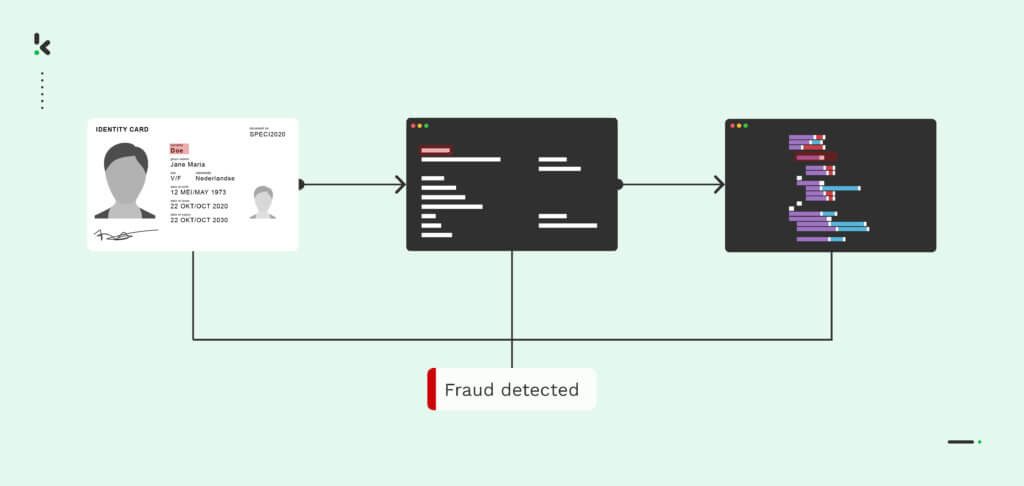
Document verification is the process of confirming the authenticity, validity, integrity, and ownership of a document such as a passport, driver’s license, bank statement, or proof of address using AI-powered software and sometimes manual review. It ensures that documents are genuine, unaltered, and belong to the correct person, making it essential for compliance with KYC document verification and AML regulations in industries like banking, fintech, healthcare, and e-commerce.
According to the Federal Trade Commission, in 2024, identity theft cases reported to the Federal Trade Commission exceeded 1.1 million in just the first nine months, setting a pace for a record-breaking year of fraud. Businesses face increasing risks to their security, reputation, and regulatory compliance as fraudulent activities grow more sophisticated and more frequent.
Modern document verification services address these challenges by combining automated document verification with advanced technologies such as Optical Character Recognition (OCR), facial recognition, liveness detection, NFC chip reading, and database cross-referencing. These tools detect forgeries, identify tampering, and prevent fraudulent activity in real time.
Key Takeaways
- Document verification confirms the authenticity, validity, integrity, and ownership of documents such as passports, ID cards, bank statements, and proof of address.
- Verification can be manual or automated using AI technologies like OCR, computer vision, biometric matching, NFC chip reading, and database cross-referencing.
- AI-powered systems deliver faster processing times, higher accuracy, enhanced fraud detection, and scalability, while supporting compliance with KYC, AML, GDPR, and HIPAA.
- Common use cases include identity verification, proof of address, online onboarding, invoice validation, age verification, and secure hiring processes.
- Human-in-the-loop verification adds manual review for sensitive or high-risk transactions, combining automation efficiency with human judgment.
What is Document Verification?
Document verification is the process of confirming the authenticity, validity, integrity, and ownership of a document such as a passport, driver’s license, bank statement, or proof of address. It is a critical step for preventing fraud and meeting compliance requirements like KYC document verification and AML regulations.
Verification can be done manually, where human reviewers inspect documents for security features and data accuracy, or it can be automated, using AI-powered software to extract, analyse, and validate information at scale with high speed and precision.
Manual Document Verification
Manual document verification relies on human review to inspect and confirm document details. This typically involves:
- Visual inspection for security features such as holograms, watermarks, and official seals.
- Checking that names, dates, and other fields match submitted information.
- Ensuring all required sections are present according to standard formats.
Manual verification can be suitable for small organisations or low-volume scenarios. However, it is slower, more prone to human error, and less scalable. High-volume industries tend to avoid manual checks due to processing delays and operational costs.
Automated Document Verification Using AI
Automated document verification uses AI-powered software to process documents quickly and accurately. The system typically combines:
- Optical Character Recognition (OCR) to convert images into searchable text.
- Machine learning and computer vision to detect fraud, tampering, or structural inconsistencies.
- NFC reading to extract secure RFID chip data from modern passports or IDs.
- Facial recognition with liveness detection to confirm document ownership.
- Database cross-referencing to validate extracted data against trusted sources.
Automated verification significantly reduces turnaround time, eliminates many manual errors, and supports compliance with regulations such as KYC, AML, GDPR, and HIPAA. It is ideal for industries requiring rapid, high-volume verification including banking, fintech, healthcare, logistics, and e-commerce.
How Does Document Verification Work?
The document verification process involves a series of steps designed to ensure that a submitted document is authentic, valid, and belongs to its rightful owner. Automated systems combine AI, OCR, and database checks to detect forgeries, prevent fraud, and confirm compliance with regulations such as KYC, AML, and GDPR.
Step 1: Document Collection
The process begins with collecting the document. Users submit a high-quality image or scan through a mobile app, web portal, or API integration. Real-time capture guidance helps ensure proper lighting and positioning, reducing the chance of blurry or incomplete submissions.
Step 2: Data Extraction
Once the document is collected, Optical Character Recognition (OCR) technology converts the image into machine-readable text. Key fields such as name, date of birth, document number, issue date and expiration date are extracted for further analysis.
Step 3: Data Validation
AI algorithms and computer vision analyze document structure, formatting, fonts, and security features like holograms, watermarks, microtext, or kinegrams. The system checks for tampering, missing elements, or inconsistencies to detect fraudulent alterations.
Step 4: Identity and Liveness Verification
To confirm ownership, the system may request a selfie. Facial recognition compares the selfie to the photo on the document, while liveness detection ensures it is taken in real time rather than from a static image or video replay.
Step 5: Database Cross-Referencing
Extracted data is matched against trusted databases such as government records, watchlists, credit bureaus, or industry-specific registries. This step verifies that the document is legitimate and that the identity information is accurate.
Step 6: Human-in-the-Loop Verification
Some organizations require an extra layer of assurance for high-risk or high-value transactions. In Human-in-the-Loop verification, flagged documents undergo manual review by trained specialists. Reviewers inspect unusual cases, verify security features, and confirm against additional sources. This hybrid model combines automated efficiency with human judgment, ensuring maximum accuracy in industries like banking, healthcare, and legal services.
Step 7: Decision and Reporting
Based on the combined results, the verification system delivers a decision. Businesses can receive a full report detailing authenticity checks, validation results, and any detected anomalies. This enables rapid onboarding and compliance documentation.
Benefits of Using AI for Document Verification
AI document verification brings speed, accuracy, and scalability to the process of validating document authenticity. Compared to manual verification, AI-powered systems identify fraud faster and handle large volumes without sacrificing quality. Here are the key benefits:
- Faster Processing Times: Automated systems verify documents in seconds, enabling rapid onboarding and reducing wait times for customers.
- Increased Accuracy: Automated document verification consistently applies validation rules and detects anomalies that manual reviews can miss.
- Enhanced Fraud Detection: Document verification using AI identifies forgery, photo manipulation, altered security features, mismatched fonts, and incorrect layouts.
- Regulatory Compliance: Supports KYC, AML, GDPR, and HIPAA requirements by ensuring secure, accurate documentation.
- Cost Savings: Reduces operational costs by lowering reliance on manual verification and preventing losses from fraud.
- Scalability: Processes thousands of verifications daily without sacrificing quality, perfect for high-volume industries.
- Optional Human-in-the-Loop: Adds manual review for flagged cases, combining automation efficiency with human judgment for maximum accuracy.
AI-powered verification transforms how businesses handle compliance, fraud prevention, and customer onboarding. By combining speed, accuracy, advanced fraud detection, and scalability, these systems not only save money but also protect brand reputation.
Key Technologies in Document Verification
Modern document verification software uses a combination of artificial intelligence, machine learning, and advanced imaging technologies to ensure speed, accuracy, and reliability. These tools enable digital document verification at scale, reducing manual workload and improving fraud detection rates.
Optical Character Recognition (OCR)
OCR converts document images into machine-readable text. This allows automated systems to extract fields such as names, dates, numbers, and addresses quickly and without manual data entry errors.
Computer Vision
Computer vision algorithms analyze an image’s layout, font styles, and security features like holograms, watermarks, microtext, or kinegrams. They can detect subtle signs of tampering or forgery, even those invisible to the naked eye.
Artificial Intelligence and Machine Learning
AI models learn from millions of document samples to identify patterns, detect inconsistencies, and flag anomalies. Machine learning improves over time, increasing accuracy and reducing false positives in AI document verification workflows.
NFC and RFID Chip Reading
Many modern passports and ID cards contain secure chips with embedded personal data. NFC reading retrieves this data directly, ensuring accurate verification against official records and eliminating the risk of visual-only inspection errors.
Biometric Matching and Liveness Detection
Biometric algorithms compare a selfie taken during verification to the portrait on the document. Liveness detection ensures the selfie is captured in real time and is not a static photo or video replay, confirming document ownership with high confidence.
Document Verification API and SDK
A document verification API allows businesses to integrate verification capabilities into their own platforms, portals, or mobile apps. An SDK enables fast deployment with pre-built modules and tools for tailoring verification workflows to specific business needs.
Cross-Referencing with Trusted Databases
Verification systems match extracted document data against trusted sources such as government registries, watchlists, and credit bureau records. This confirms authenticity and detects stolen or fraudulent identities.
Common Use Cases for Document Verification
Document verification solutions are used across industries to improve security, streamline workflows, and meet compliance requirements. By validating identity and proving document authenticity, organizations can prevent fraud and ensure trust.
Identity Document Verification
Pain point: Identity fraud threatens onboarding, transactions, and regulatory compliance.
Solution: Using identity document verification, businesses confirm that passports, driver’s licenses, or national ID cards are genuine and belong to the correct person. This is essential for KYC and AML compliance in banking, fintech, and insurance.
Proof of Address Verification
Pain point: Address misrepresentation can enable fraud, illegal activity, or misuse of services.
Solution: Proof of address verification checks utility bills, bank statements, or rental agreements for authenticity. This ensures customers meet location requirements and prevents unauthorized account creation.
Digital and Online Document Verification
Pain point: Remote transactions require secure verification without physical presence.
Solution: Digital document verification and online document verification allow customers to submit documents via web or mobile apps. AI-powered checks ensure the same level of accuracy as in-person reviews, enabling global onboarding.
Automated Invoice or Proof of Income Verification
Pain point: Fake invoices or income documents can lead to credit risk and regulatory breaches.
Solution: Automated systems verify pay slips, tax returns, and invoices, cross-checking them against known patterns and trusted databases. This helps financial institutions and lenders assess repayment capacity while staying compliant.
Age Verification
Pain point: Selling age-restricted products or services to minors can result in legal penalties.
Solution: Age verification systems confirm that submitted ID documents meet legal age requirements. This is widely used in gaming, alcohol sales, online streaming, and adult services.
Secure Employee and Vendor Onboarding
Pain point: Hiring or contracting without verifying identity and credentials can result in internal fraud or reputational risk.
Solution: Document verification protects organizations by validating identity documents and certifications during onboarding of customers or employees, ensuring legitimacy and trust.
Document Verification with Klippa DocHorizon
With fraud cases reaching unprecedented levels and compliance demands constantly increasing, now is the time to upgrade to a reliable, AI-powered verification system. Doxis AI.dp brings together cutting-edge technology, flexible deployment, and global regulatory alignment to protect your business and build customer trust.
Doxis DocHorizon is a complete document verification solution that combines automated AI checks with optional human-in-the-loop review for unmatched accuracy. Businesses across banking, fintech, healthcare, logistics, and e-commerce trust Doxis to handle identity document verification, digital document verification, and proof of address verification securely and at scale.
Key Advantages:
- Superior Technology & Performance: High-speed OCR, advanced AI fraud detection, NFC chip reading, and biometric matching.
- Seamless Integration: Deploy with our document verification API or SDK to fit directly into your existing workflows.
- Global Coverage & Compliance: Full support for KYC, AML, GDPR, and HIPAA requirements.
- Clear ROI & Efficiency: Reduce fraud losses, accelerate onboarding, and lower operational costs.
- Flexible Verification Options: Fully automated processing or hybrid human-in-the-loop review for sensitive cases.
Experience fast, accurate, and secure document verification with Doxis AI.dp! Book a free demo below or speak with one of our experts to explore API and SDK options.
FAQ
Document verification is the process of confirming the authenticity, validity, integrity, and ownership of documents such as passports, ID cards, bank statements, or proof of address. It ensures that they are genuine, unaltered, and belong to the correct person, often using AI-powered software and database checks.
2. What are the types of document verification?
– Manual document verification, where human reviewers inspect documents for security features, data accuracy, and completeness.
– Automated document verification using AI, which uses technologies like OCR, computer vision, biometric matching, NFC reading, and machine learning to validate documents at scale with high speed and accuracy.
3. What technologies are used in AI document verification?
Key technologies include: OCR for text extraction, computer vision for forgery detection, machine learning for anomaly detection, NFC chip reading for passport and ID verification, biometric matching with liveness detection, and API/SDK integration for custom workflows.
4. What is KYC document verification?
KYC document verification is the process of validating identity documents to meet Know Your Customer regulations in industries like banking, fintech, and insurance. It ensures that customers are who they claim to be and prevents fraud or money laundering.
5. What is identity document verification?
Identity document verification checks passports, driver’s licenses, or national ID cards for authenticity, validity, and ownership, often using biometric matching to confirm the rightful owner.
6. What is a document verification API and SDK?
A document verification API integrates verification capabilities into an organisation’s platform, while a SDK provides prebuilt tools for embedding document verification features into software or apps quickly.
7. How does human-in-the-loop verification work?
In human-in-the-loop verification, flagged documents are reviewed manually by trained specialists. This combines automation efficiency with human judgment for maximum accuracy in sensitive or high-value cases.
8. Which industries use document verification?
Industries include banking, fintech, healthcare, logistics, e-commerce, travel, and government services, each requiring compliance with KYC, AML, GDPR, or HIPAA regulations.
9. Why choose Doxis AI.dp for document verification?
Doxis AI.dp offers AI-powered verification with API and SDK integration, NFC chip reading, biometric matching, human-in-the-loop review, global coverage, and full regulatory compliance, delivering superior accuracy, speed, and ROI.