

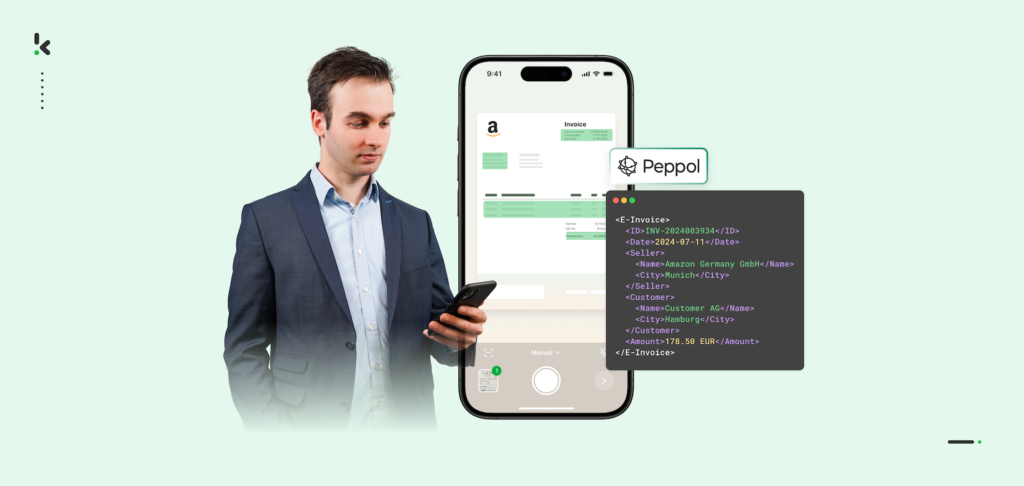
Mandatory e-invoicing is rapidly becoming a requirement in Europe, Latin America, and Asia, driven by stricter tax regulations and digital reporting mandates. For Independent Software Vendors (ISVs), this shift means your SaaS platform must support standardized, machine-readable invoice formats and direct connections to networks like Peppol to stay competitive.
Without built-in e-invoicing, your customers face manual compliance challenges, rejected invoices, and delayed payments. All of which hurt their business and your platform’s value. Competitors who integrate e-invoicing APIs are turning compliance into a selling point, increasing user loyalty and boosting market reach.
By embedding e-invoicing into your SaaS platform, you can automate regulatory adherence, reduce errors through validation, and improve payment cycles. This guide will show you exactly how to integrate e-invoicing effectively, from choosing the right strategy and provider to ensuring security and long-term success.
Key Takeaways
- Mandatory e-invoicing is spreading worldwide across Europe, Latin America, and Asia, making integration crucial for SaaS platforms and software providers.
- Embedding an e-invoicing partner API is the most effective strategy, delivering scalability, global compliance, and reduced workload.
- The right provider should offer global compliance updates, Peppol connectivity, real-time tax reporting, data validation, and machine-readable formats.
- Compliance and security are essential, look for GDPR adherence, ISO 27001 and SOC 2 Type II certification, digital signatures, secure archiving, and controlled access.
- Best practices include planning for scalability, proactively monitoring regulation changes, offering user-friendly invoice versions, and automating AR/AP workflows.
What is E-Invoicing Integration for SaaS Platforms?
E-invoicing integration means connecting your SaaS platform to a system that can create, send, and process invoices in a standardized, machine-readable format while automatically meeting local regulatory requirements.
Instead of relying on manual processes or PDF attachments, the system formats invoice data according to country-specific rules and often sends it directly to tax authorities in real time.
For software vendors, e-invoicing integration is more than just a technical upgrade. It is a strategic feature that ensures your users can stay compliant with global tax laws, avoid costly errors, and exchange invoices securely with partners and governments.
Common formats include UBL, Factur-X, and XML. Many regions also require connections to networks like Peppol, which enable safer and standardized electronic document exchanges.
With mandatory e-invoicing spreading across key markets, embedding this functionality into your SaaS platform allows you to expand into more regions, meet customer expectations for automation, and increase overall platform stickiness.
Choose Your Integration Strategy
When adding e-invoicing to your SaaS platform, the integration strategy you choose will define how quickly you can launch, how well you can maintain compliance, and how much control you retain over the user experience.
Independent Software Vendors typically have three paths to consider. Each comes with its own trade-offs between speed, scalability, cost, and compliance.
Understanding these options will help you decide which aligns best with your business goals, development resources, and geographic market coverage.
Embed an E-Invoicing Partner API
An API-based integration allows you to connect directly to a specialized e-invoicing service. This partner handles complex aspects such as multi-country compliance, format conversion, and connections to platforms like Peppol.
Your users see a unified invoicing experience inside your UI, while the provider manages regulatory changes and system updates in the background.
Pros:
- Scalability across multiple countries without additional development burden
- Automatic updates for changing tax laws and formats
- Secure connections to networks like Peppol
- Reduces internal compliance workload
Cons:
- Relies on external provider performance and uptime
- Requires thorough API documentation and ongoing collaboration
Use a Basic Gateway Provider
A gateway delivers invoices digitally to recipients but focuses more on transport than compliance. You would still need to map invoice formats yourself and track tax authority requirements.
This can be a good option if you already have internal compliance expertise and simply need a sending mechanism.
Pros:
- Simple to set up and integrate
- Lower initial costs than API partnerships
- Allows more control over compliance processes if handled in-house
Cons:
- Compliance responsibility remains with you
- Requires manual monitoring and error handling
- Limited scalability for multi-country operations
Build Your Own Solution
Developing e-invoicing capabilities from scratch gives you full control over design and features. However, it also means maintaining ongoing updates for global formats, tax rule changes, and connectivity to various networks.
This option can be risky for software providers without large compliance and development teams.
Pros:
- Complete control over user experience and functionality
- No dependency on third-party providers
- Can be tailored exactly to your platform’s needs
Cons:
- High development and maintenance costs
- Requires continuous monitoring of international regulations
- Time-consuming to keep up with new formats and tax authority integrations
Choosing the right e-invoicing integration strategy is about balancing compliance needs, scalability, and development resources.
While building your own solution offers full control, it comes with high costs and complexity. Gateway providers can be quick to set up, but leave compliance in your hands.
Partnering via API gives the best mix of ease, compliance coverage, and scalability, making it the preferred choice for most software providers looking to future-proof their SaaS platforms.
How to Select a Provider with Key Features
Once you have chosen your integration strategy, the next step is finding the right e-invoicing provider. This choice is critical, as your partner will determine how easy the integration is for your development team, how compliant your platform remains over time, and how smooth the invoicing experience is for your users.
An ideal e-invoicing provider should give you the technical tools and compliance expertise to expand into new markets without worrying about regulatory updates or data formatting headaches.
Below are the essential features you should look for, along with why they matter.
Global Compliance
Your provider should automatically stay up to date with tax laws, invoice standards, and submission protocols across all countries you support.
This includes handling local requirements for fields like VAT rates, tax identification numbers, invoice numbering rules, and layout specifications.
With global compliance built into the system, you avoid manually updating your platform whenever a regulation changes.
Why it matters: This ensures your SaaS platform can move into new markets confidently, without needing constant development resources to keep up with legal changes.
Peppol Access
Peppol is a secure, standardized document exchange network used by governments and companies across Europe, Asia-Pacific, and beyond.
A provider with Peppol connectivity can deliver invoices in the exact required format, ensure authenticity, and allow safe transmission directly to recipients or authorities.
Why it matters: Many B2G and even B2B transactions now require Peppol connectivity, making it essential for software providers that plan to operate internationally or serve large enterprise clients.
Real-Time Reporting
In countries like Italy, Mexico, and several others, invoice data must be sent directly to tax authorities in real time before being delivered to customers or partners.
A capable provider should offer automated reporting that happens seamlessly in the background, with no manual intervention required from your users.
Why it matters: Real-time reporting prevents issues such as delayed processing or rejected invoices, and it keeps you aligned with strict government requirements.
Data Validation and Enrichment
Validation ensures that all mandatory fields are filled correctly, checks that VAT rates match applicable standards, and confirms that invoice numbering is accurate.
Enrichment involves automatically adding missing information, such as standardized company identifiers or address formatting.
Why it matters: Automatic validation and enrichment reduce errors, speed up approval cycles, and improve invoice acceptance rates by tax authorities and recipients.
Support for Machine-Readable Formats
Machine-readable formats like UBL, UN/CEFACT, and Factur-X are required in many jurisdictions for automated processing.
A good provider should handle converting your invoice data into these formats while also offering human-readable versions, such as PDFs, for your customers to view.
Why it matters: This allows your platform to meet legal requirements while keeping invoices accessible and easy to understand for end users.
Selecting the right provider means prioritizing compliance coverage, technical capabilities, and ease of integration.
APIs that combine global compliance, Peppol access, and real-time validation will help your SaaS platform deliver a frictionless invoicing experience while staying ready for any regulation change.
Implementation Process for Software Providers
Once you have chosen your integration strategy and selected a provider with the right features, it is time to bring e-invoicing into your SaaS platform. The implementation process will determine how quickly you launch, how smoothly users adapt, and how efficiently compliance is maintained.
Here are the five key steps to follow:
Step 1: Define Use Cases
Before you start integration, identify how your customers will use e-invoicing. Do they need B2B, B2C, or B2G invoicing? Each use case may involve different formats, compliance requirements, and submission flows.
Tip: Speak with a few key clients to learn what formats and networks they rely on most. This will help you prioritize features and avoid unnecessary complexity.
Step 2: Map Invoice Data
Ensure your platform’s invoice fields match the e-invoicing provider’s requirements. This often includes tax ID numbers, VAT rates, line items, invoice numbering rules, and payment terms.
Tip: Create a mapping document so your development team and provider can align on data structure early. This will prevent integration issues later on.
Step 3: Integrate via API
Connect your billing or invoicing system to the provider’s API. This integration should automate tasks like invoice creation, digital signing, and sending.
Tip: Use the developer documentation to streamline integration. Focus on making the process invisible to users, so they send compliant e-invoices without noticing any change in their workflow.
Step 4: Set Up Sandbox Testing
Before going live, test the full process in a sandbox environment. This should include creating and sending invoices, receiving confirmations, handling errors, and simulating real-time reporting to tax authorities.
Tip: Create test scenarios that mimic common user errors, such as missing VAT details or incorrect invoice numbering, to ensure your system handles them correctly.
Step 5: Implement White-Labeling
Make sure the invoicing process feels native to your SaaS platform by using your branding and design for all invoice-related screens. This keeps users fully within your system and strengthens your product’s stickiness.
Tip: Work with your provider to customize labels, messages, and user-facing elements so the e-invoicing experience matches your platform’s tone and style.
Compliance and Security Requirements
Integrating e-invoicing into your SaaS platform involves much more than enabling invoice delivery in the correct format. Since each invoice contains sensitive financial and personal data, ensuring robust security and regulatory compliance is non-negotiable.
Meeting these requirements not only keeps your customers safe but also protects your business from fines, rejection of invoices, and reputational damage.
GDPR Compliance
If your SaaS platform processes invoices for customers in the EU, it must comply with GDPR. This includes strict guidelines on how data is stored, accessed, and safeguarded to ensure privacy and security.
Industry Certifications
Providers with certifications such as ISO 27001 and SOC 2 Type II demonstrate robust security management practices. These certifications help maintain data protection standards and build trust with clients.
Legally Compliant Digital Signatures
Digital signatures verify invoice authenticity and integrity, making them legally valid in many jurisdictions. Your e-invoicing system should automatically apply signatures according to local regulations.
Secure Archiving
Invoices must often be stored for several years in formats that prevent tampering. Secure archiving ensures compliant retention and easy retrieval during audits.
Data Access Controls
Access to invoice data should be limited to authorized individuals. Using role-based permissions protects sensitive information and ensures accountability.
Compliance and security must be integral to your e-invoicing strategy. By ensuring GDPR adherence, relying on certified providers, enabling digital signatures, securing invoice storage, and controlling data access, software vendors can offer their customers reliable and legally compliant invoicing processes while safeguarding their own business interests.
Best Practices for Long-Term Success
Successfully integrating e-invoicing into your SaaS platform is only the beginning. To keep the solution valuable for your customers and compliant with evolving regulations, you need a long-term strategy.
Plan for Scalability
Choose a solution that can handle increasing invoice volumes as your customer base grows. Scalable systems allow you to expand into new markets without rebuilding your infrastructure.
Monitor Regulation Changes
Tax laws change quickly, so staying informed is essential. A provider that updates compliance rules automatically will help you keep your platform aligned with local requirements.
Provide Human-Readable Versions
Machine-readable formats meet compliance needs, but can be hard for users to interpret. Offering a PDF copy makes invoices easy to review and approve.
Automate Accounts Receivable and Payable
Automation speeds up internal processes and reduces manual workload. Enabling approval workflows for AR/AP improves efficiency for your customers.
Keep User Experience Front and Center
Design the invoicing process to be seamless and intuitive. A clean, user-friendly interface builds customer loyalty and encourages continued use.
Case Study: How ActivHub and Doxis Deliver Seamless E-Invoicing
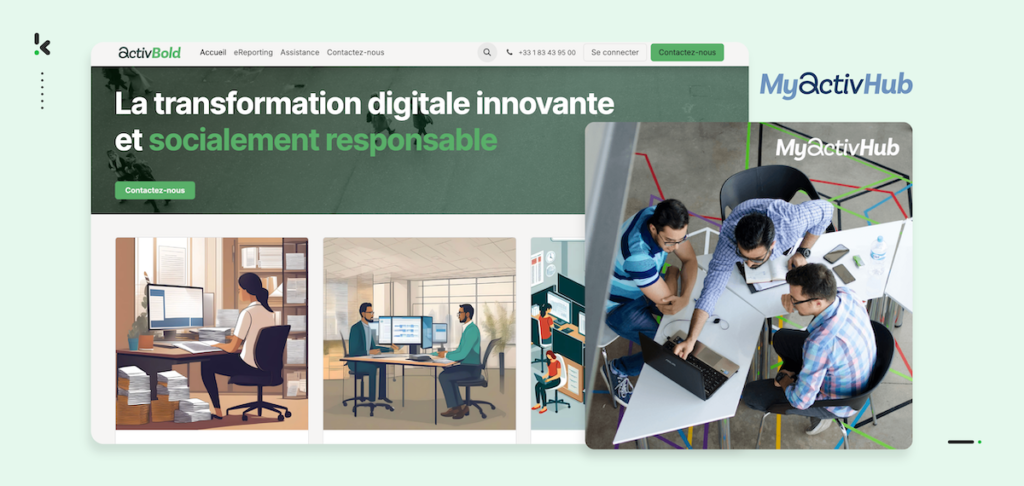
ActivHub, a European leader in online document processing and data validation, launched their ActivBold.com platform to help businesses, public institutions, and stakeholders manage complex documents with efficiency.
As many of their clients began transitioning to e-invoicing, ActivHub faced a challenge: invoices were arriving from all over the world in a variety of formats, languages, and compliance requirements. They needed a flexible, high-volume solution that could automate invoice extraction, validation, and submission, while staying compliant with diverse regulations and keeping workflows under control.
Partnering with Doxis enabled ActivHub to deliver a fully integrated e-invoicing solution. Using Doxis AI.dp’s API-first approach, they combined powerful OCR-based data extraction with automated validation logic, format conversion, and real-time tax authority reporting. ActivHub tailored these capabilities to each client’s needs, ensuring compliance with local rules, seamless Peppol connectivity, and a consistent user experience.
Together, ActivHub and Doxis created a scalable e-invoicing process that reduces manual workload, eliminates errors, and offers clients full transparency, turning regulatory complexity into operational efficiency. Read the full case study here.
How Doxis AI.dp Can Turn Compliance into a Competitive Advantage
Integrating e-invoicing is no longer optional for SaaS platforms that want to compete globally. With Doxis AI.dp, Independent Software Vendors can go beyond meeting minimum compliance requirements and use e-invoicing as a driver for growth, customer retention, and operational efficiency.
Doxis AI.dp offers an API-first e-invoicing solution designed for scale. It provides automatic compliance updates for multiple countries, supports all major machine-readable formats such as UBL and NLCIUS and connects seamlessly to the Peppol network for secure, standardized invoice exchange.
For software providers, the benefits go beyond technical capabilities:
- White-label integration: Keep the invoicing process fully native within your SaaS UI to strengthen platform stickiness.
- Efficiency gains: Automate invoice creation, signing, sending, and archiving to reduce operational workload for your clients.
- Scalable pricing: Grow your invoicing volume without heavy infrastructure investment or compliance headaches.
With Doxis AI.dp, you can offer users a seamless, compliant invoicing experience across all regions you serve, transforming what could be a regulatory burden into a feature that differentiates your platform. Get in contact with one of our e-invoicing experts or book a free demo below!
FAQ
E-invoicing is the process of creating, sending, and receiving invoices in a standardized, machine-readable format that meets local regulatory requirements. Examples include UBL, NLCIUS, and XML. The data is often sent directly to tax authorities in real time, ensuring compliance and accuracy.
2. Why should software providers integrate e-invoicing into SaaS platforms?
For Independent Software Vendors, e-invoicing integration helps customers automate compliance, reduces errors, speeds up payment cycles, and improves user experience. It also makes SaaS platforms more competitive and attractive for businesses operating in regions with mandatory e-invoicing requirements.
3. Which e-invoicing formats are supported globally?
Common formats include UBL (Universal Business Language), Factur-X, XML, and UN/CEFACT standards. The right provider will convert invoice data to the required format automatically for each region.
4. What is Peppol and why do I need it?
Peppol is a secure global network for exchanging electronic documents. Many European governments and companies require Peppol connectivity for compliant invoice delivery. Integrating Peppol ensures invoices are delivered in the correct format and reach recipients securely.
5. How long does e-invoicing integration take?
Implementation time varies based on complexity, but API-based integrations can be completed in weeks rather than months. Factors such as mapping invoice data, testing workflows, and customizing the user interface influence project timelines.